 English
 Español
 русский
 عربى
عربى 中文简体
中文简体
Content
- 1 The Evolution of Checkout Counters in Modern Retail
- 2 Engineering Excellence in Conveyor Belt Checkout Counters
- 3 The Rise of Automatic Cash Checkout Counters
- 4 Holistic Store Design: Integrating Shelving and Checkout Zones
- 5 Manufacturing Capabilities and Quality Assurance
- 6 Maintenance Protocols for Long-Term Durability
- 7 Comparing Traditional and Modern Checkout Solutions
- 8 Future Trends in Retail Equipment Manufacturing
The Evolution of Checkout Counters in Modern Retail
The retail environment has undergone a massive transformation over the past decade, shifting from simple transactional spaces to immersive customer experience hubs. At the heart of this transformation are the Checkout Counters, which have evolved from basic cash wraps into sophisticated, multi-functional command centers. As the final touchpoint in the customer journey, the design, efficiency, and technology integrated into these stations directly influence consumer satisfaction and store profitability. Leading this industrial shift is Suzhou Juren Commercial Equipment Co., Ltd., an enterprise that seamlessly integrates research and development, production, and sales to deliver world-class commercial equipment. By focusing on ergonomic design and technological integration, modern manufacturers are redefining how retail staff interact with customers, ensuring that the checkout process is both swift and pleasant.
Engineering Excellence in Conveyor Belt Checkout Counters
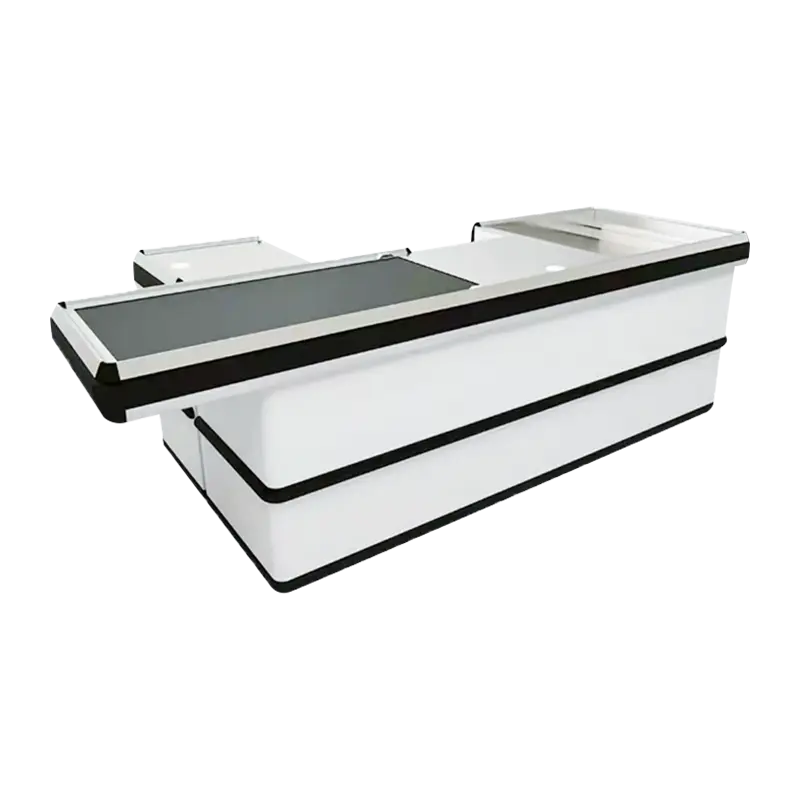
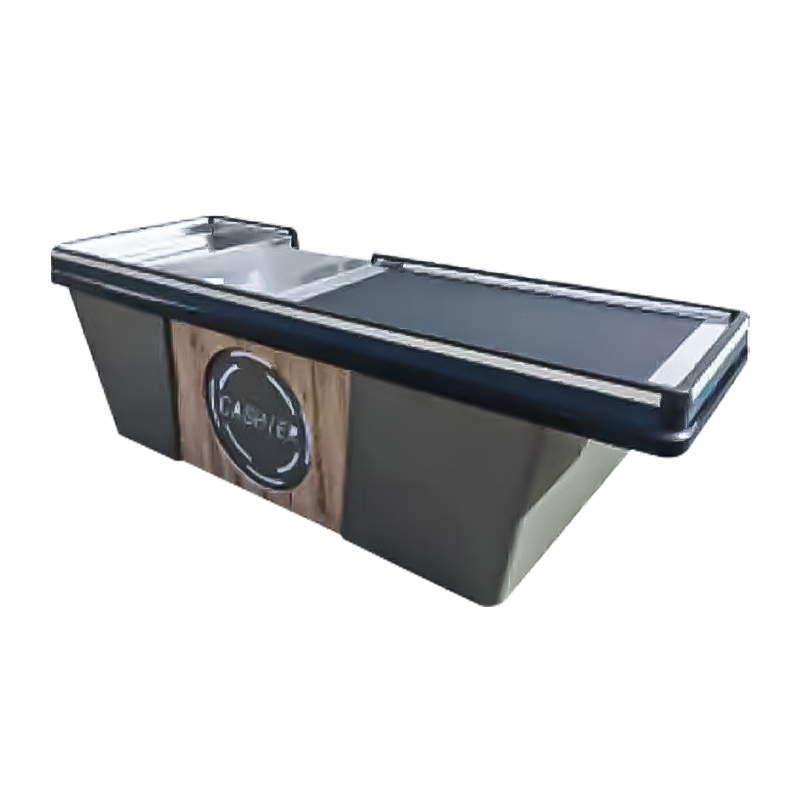
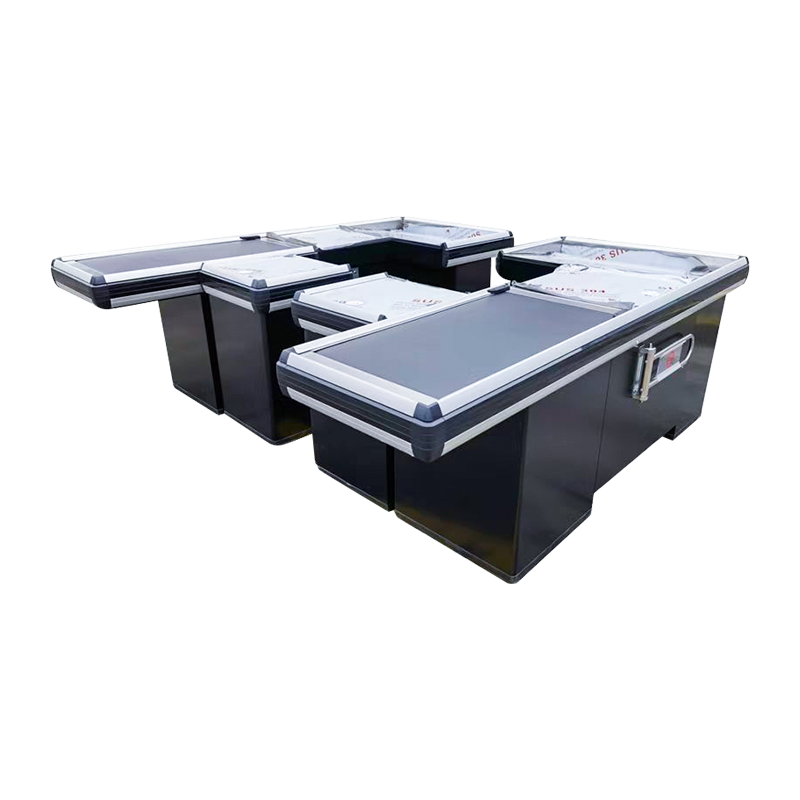
For high-volume supermarkets and hypermarkets, the speed of the checkout process is paramount. Conveyor Belt Checkout Counters have become the industry standard for these environments, utilizing motorized belts to smoothly transport goods from the shopping cart to the scanning area. This mechanization drastically reduces the physical strain on cashiers, who no longer need to manually lift heavy items onto the counter. The engineering behind these belts involves high-torque, low-noise motors paired with durable, friction-optimized belt materials that can withstand the continuous movement of heavy cans, frozen goods, and bulk items without slipping or degrading. Furthermore, the integration of photoelectric sensors ensures that the belt automatically pauses when the scanning area is full, preventing items from colliding with the scanner and ensuring a seamless workflow.
Customization for Unique Retail Spaces
Not all retail spaces are created equal, which is why a Custom Checkout Counter With Conveyor Belt is often required to meet specific architectural and operational constraints. Manufacturers like Suzhou Juren Commercial Equipment Co., Ltd. excel in tailoring these units to fit precise spatial dimensions, adjusting the length of the conveyor belt, the angle of the bagging well, and the placement of the impulse merchandise display. Customization also extends to the integration of specific point-of-sale hardware, such as embedded scales, biometric payment terminals, and specialized bagging dispensers. By collaborating closely with retail planners, manufacturers can produce bespoke solutions that maximize floor space efficiency while maintaining optimal traffic flow during peak shopping hours.
The Rise of Automatic Cash Checkout Counters
As labor costs rise and consumer preference for self-service grows, Automatic Cash Checkout Counters have transitioned from a novelty to a necessity. These advanced systems allow customers to scan, bag, and pay for their items without the assistance of a traditional cashier. The technology powering these units is highly complex, incorporating advanced computer vision cameras, weight-sensitive platters, and sophisticated RFID readers to verify that the item scanned matches the item placed in the bagging area. This security measure, often referred to as "pack and go" verification, drastically reduces shrinkage and prevents common self-checkout errors. Furthermore, modern automatic units are equipped with high-capacity cash recyclers that can accept, validate, and dispense both coins and banknotes, providing a fully autonomous transaction experience.
Holistic Store Design: Integrating Shelving and Checkout Zones
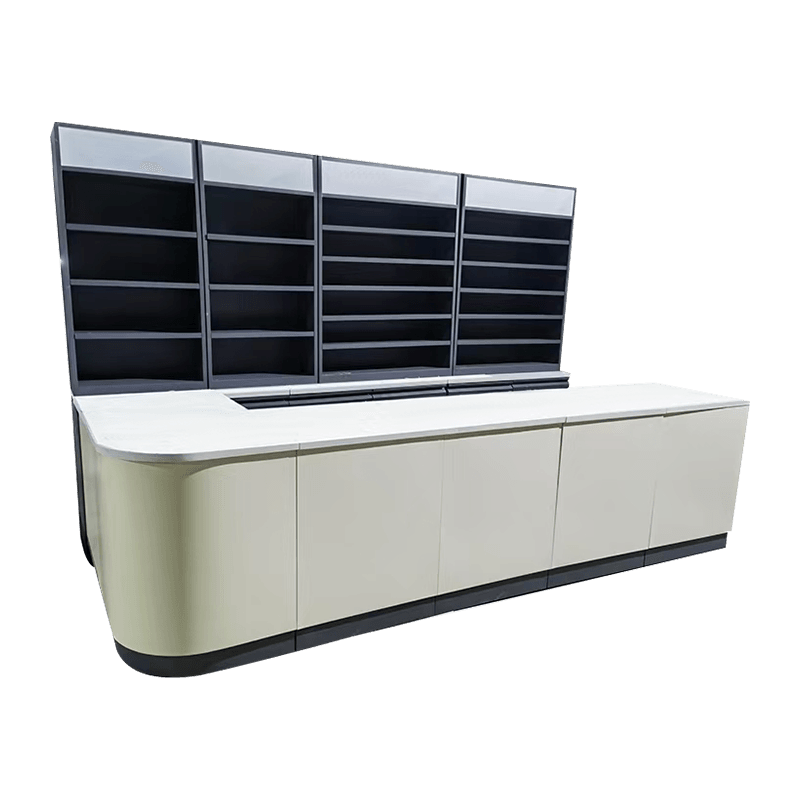
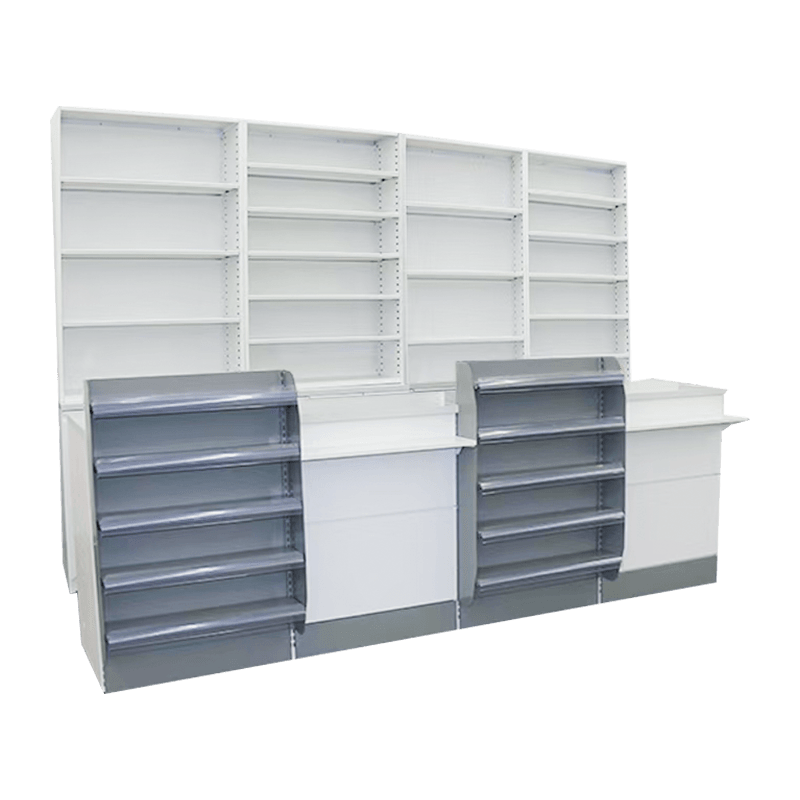
A highly efficient checkout area cannot exist in isolation; it must be perfectly synchronized with the rest of the store's layout and fixtures. The flow of goods from the aisles to the Convenience store cash register requires a strategic arrangement of display units that guide the customer naturally toward the exit. For instance, the placement of steel and wood shelves near the checkout zone can create a visually appealing transition from the main shopping floor to the transaction area. These hybrid shelving units combine the structural strength of steel with the warm, premium aesthetic of wood, making them ideal for displaying high-margin impulse items, artisanal snacks, or promotional goods that catch the customer's eye while they wait in line.
Specialized Fixtures for High-Value and Fresh Goods
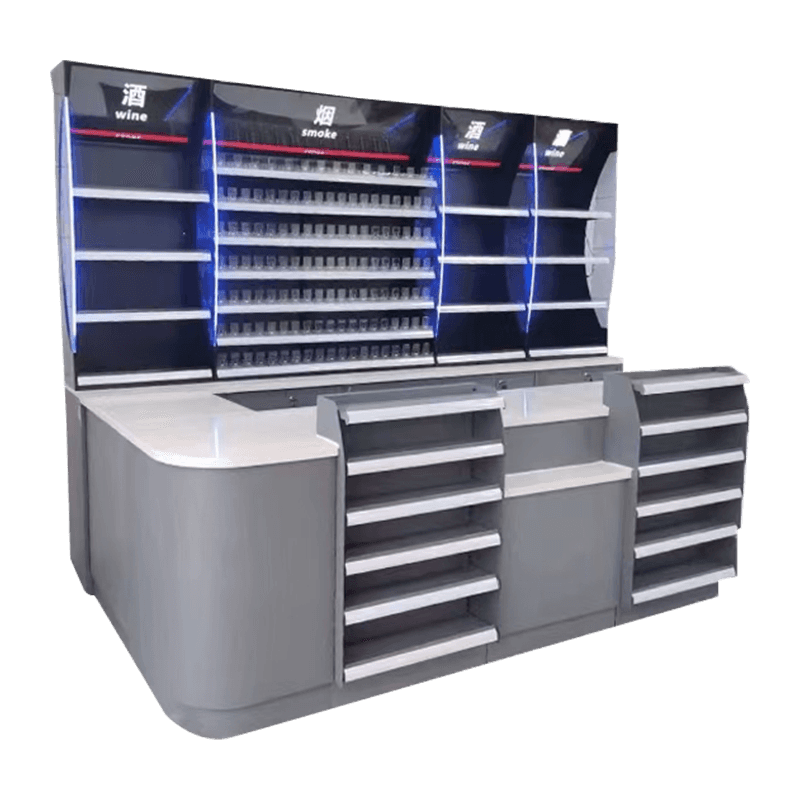
Beyond standard shelving, specialized fixtures play a crucial role in store security and product preservation. Tobacco and wine cabinets are critical components located immediately behind or adjacent to the checkout counters. These units are engineered with integrated locking mechanisms, tempered glass, and specialized LED lighting to showcase premium products while strictly adhering to age-restricted sales regulations. Similarly, the fresh produce section relies heavily on custom fruit and vegetable shelves. These fixtures are designed with sloped bins, integrated misting systems to maintain produce freshness, and built-in drainage channels to prevent water accumulation. The strategic placement of these fresh sections near the checkout ensures that temperature-sensitive items are the last to be selected, minimizing the time they spend in the customer's cart before payment.
Manufacturing Capabilities and Quality Assurance
Producing high-quality commercial equipment requires a robust production system that ensures seamless processes and consistent output. Suzhou Juren Commercial Equipment Co., Ltd. leverages a highly skilled workforce and experienced professionals to maintain strict quality control from the initial design phase to final assembly. The manufacturing of checkout counters involves precision laser cutting, automated welding, and advanced powder coating processes to ensure the steel frames are resistant to scratches, corrosion, and the daily wear and tear of a busy retail environment. By continuously researching and developing special specifications and processes, the company ensures that its products not only meet current industry standards but also anticipate future retail trends, providing customers with equipment that is built to last and adapt.
Maintenance Protocols for Long-Term Durability
To ensure that checkout counters and associated fixtures maintain their operational efficiency and aesthetic appeal, retail operators must implement rigorous maintenance protocols. Regular upkeep prevents minor issues from escalating into costly downtime, particularly for mechanized units like conveyor belts and automatic cash recyclers. The following practical maintenance steps are essential for prolonging the lifespan of retail checkout equipment:
- Inspect and clean the conveyor belt tracks weekly to remove debris, sticky residues, and dust that can cause the belt to slip or the motor to overwork.
- Lubricate the moving parts of the conveyor motor and the mechanical hinges of the checkout counter doors every three months using manufacturer-approved lubricants.
- Calibrate the weight sensors and clean the camera lenses of Automatic Cash Checkout Counters daily to ensure accurate item recognition and prevent transaction errors.
- Check the integrity of the powder coating on steel and wood shelves and touch up any scratches immediately to prevent rust formation and maintain the premium visual appeal.
- Test the electronic locking mechanisms and LED lighting in tobacco and wine cabinets monthly to ensure security compliance and optimal product visibility.
Comparing Traditional and Modern Checkout Solutions
When planning a store layout or upgrading existing equipment, retailers must carefully evaluate the differences between traditional setups and modern automated solutions. The table below provides a detailed comparison of the operational characteristics, space requirements, and customer impact of various checkout configurations available through leading manufacturers.
| Feature | Traditional Manual Counter | Conveyor Belt System | Automatic Cash Checkout |
| Transaction Speed | Moderate | High | Very High (for small baskets) |
| Floor Space Required | Compact | Extensive | Moderate |
| Labor Requirement | 1 Full-time Cashier | 1 Full-time Cashier | 1 Attendant per 4-6 units |
| Customer Interaction | High | Moderate | Low |
| Best Application | Boutiques, Small Markets | Supermarkets, Hypermarkets | Convenience Stores, Express Lanes |
Future Trends in Retail Equipment Manufacturing
The future of checkout counters and commercial fixtures lies in the seamless integration of IoT (Internet of Things) technology and sustainable materials. Manufacturers are increasingly embedding smart sensors into conveyor belts and shelving units to monitor usage patterns, track maintenance needs in real-time, and optimize energy consumption. Additionally, there is a growing demand for eco-friendly materials, such as recycled steel and sustainably sourced wood for shelving, alongside biodegradable plastics for counter components. As Suzhou Juren Commercial Equipment Co., Ltd. and other industry leaders continue to innovate, the focus will remain on creating equipment that not only drives operational efficiency but also aligns with the global push toward sustainability and smart retail ecosystems. By investing in advanced, customizable, and durable checkout solutions, retailers can future-proof their operations and deliver a superior shopping experience in an increasingly competitive market.