 English
 Español
 русский
 عربى
عربى 中文简体
中文简体
Content
What Is a Convenience Store Zone — and Why Does It Matter?
Walk into any high-performing convenience store and the layout feels effortless. Beverages are at the back. Snacks line the middle aisles. The checkout counter is stocked with small items you didn't know you needed. That sense of intuitive order is not accidental — it is the result of deliberate zone planning.
A convenience store zone is a defined section of the retail floor dedicated to a specific product category and its corresponding customer behavior. Rather than distributing products randomly across available shelf space, zone planning groups merchandise by how shoppers move through a store, what they come in to buy, and what they are most likely to add to their basket along the way.
The business case is straightforward. Stores with clearly defined zones report higher average transaction values, lower restocking labor costs, and fewer customer navigation complaints. When each zone is supported by the right display equipment — the right shelf type, the right counter configuration, the right cooler placement — the physical environment does much of the selling work automatically.
This guide breaks down the six core zones found in modern convenience stores, with a focus on the equipment decisions that make each one perform.
The Checkout Zone: Where Every Transaction Becomes an Opportunity
Every customer passes through the checkout zone. No other location in a convenience store guarantees that level of foot traffic — which is exactly why the checkout counter is the most commercially valuable piece of real estate in the building.
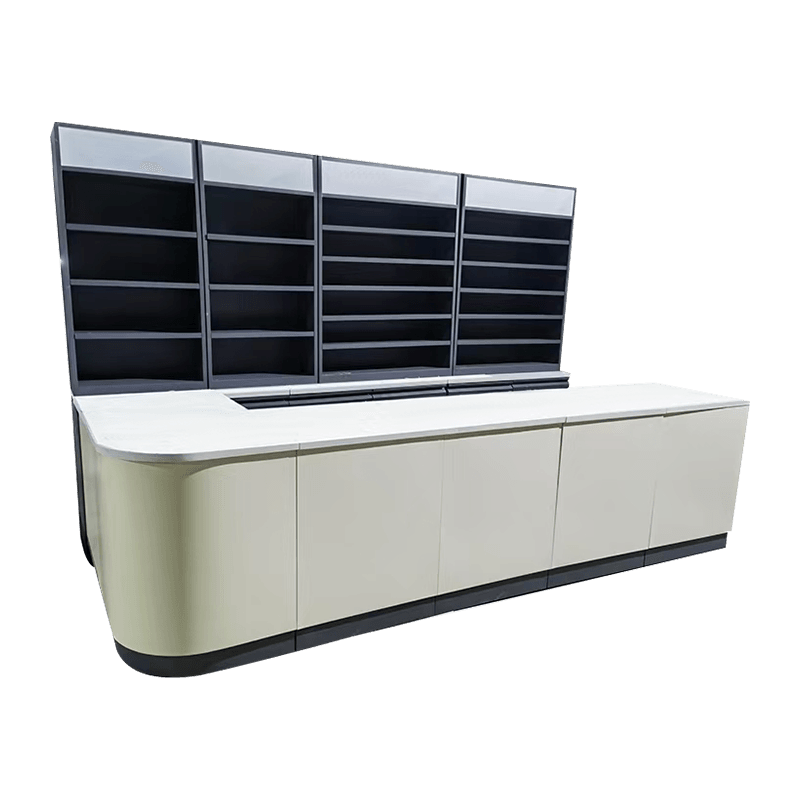
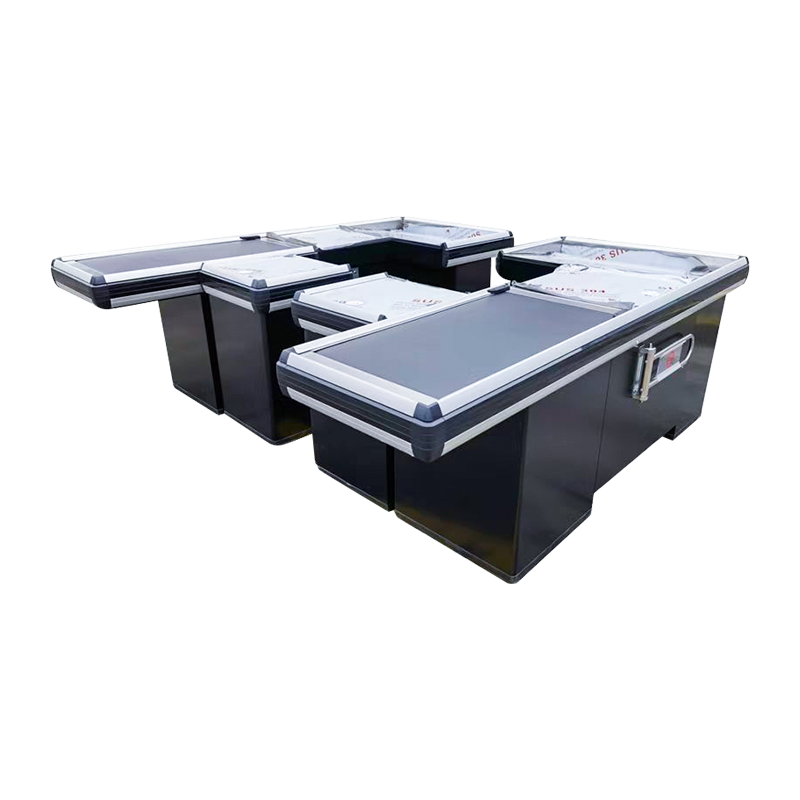
A well-configured checkout zone does two things simultaneously: it processes transactions efficiently and converts waiting time into additional sales. The equipment at the center of this zone is the checkout display counter, and its design determines how well both objectives are met.
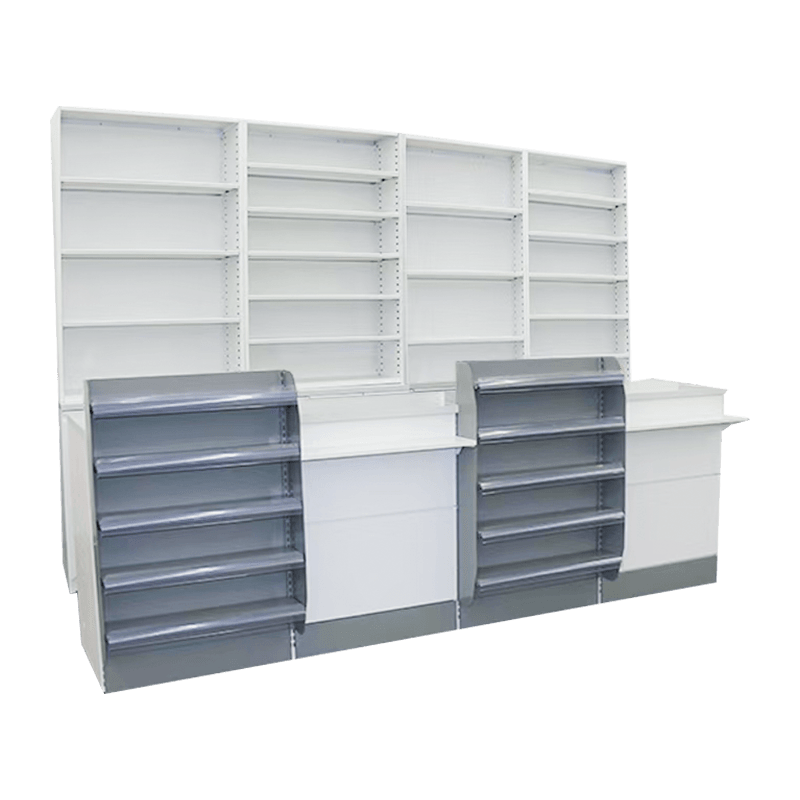
The countertop itself needs to be spacious enough for cashiers to scan and bag items without congestion, while remaining ergonomically positioned to reduce fatigue during long shifts. Beyond the transaction surface, the front-facing panels and multi-tier display shelves built into the counter are prime positions for impulse-buy merchandise — chewing gum, mints, lighters, phone accessories, and single-serve snacks. These items require no deliberate shopping intent; they are picked up because they are visible, within reach, and priced for quick decisions.
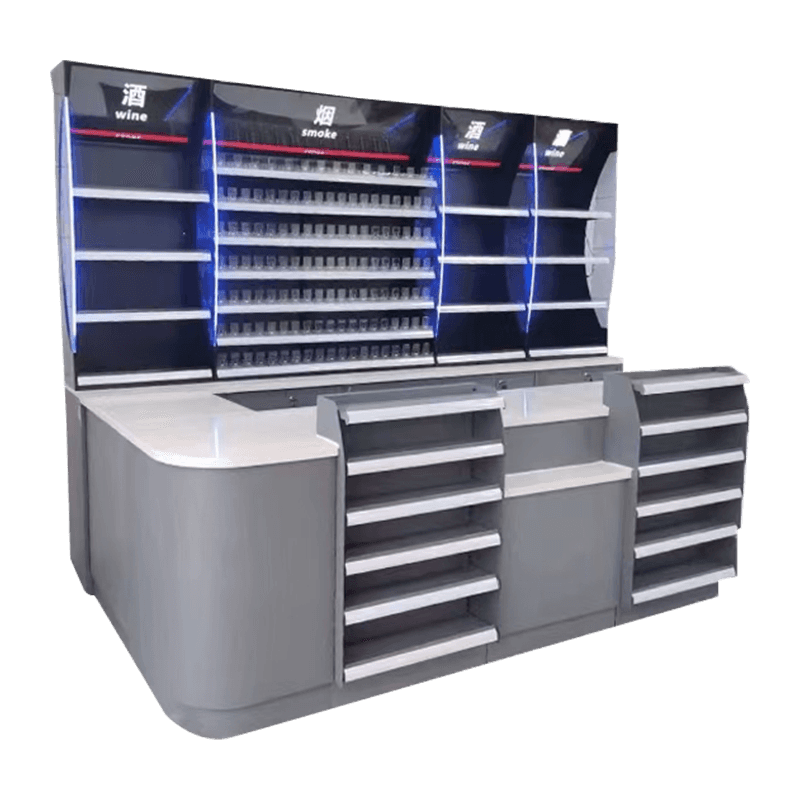
Storage is the third consideration. Checkout counters with integrated lower cabinets allow staff to keep backup stock, bags, and operational supplies off the floor and out of sight, maintaining a clean and professional appearance at the store's most visible point. Our checkout display counters designed for convenience store zones combine all three functions — transaction surface, impulse display, and integrated storage — in a compact footprint suited to the limited floor space of most c-stores.
For chains and franchise operations, checkout counter aesthetics also carry brand weight. Metallic finishes, streamlined profiles, and consistent counter heights across locations reinforce a coherent brand identity that customers recognize and associate with quality.
The Snack and Grab-and-Go Zone
Snacks, confectionery, and grab-and-go packaged foods are the backbone of convenience store revenue. This zone typically occupies the central aisles of the store, positioned so that customers heading to any other destination — the cooler, the coffee station, the checkout — pass through it at least once.
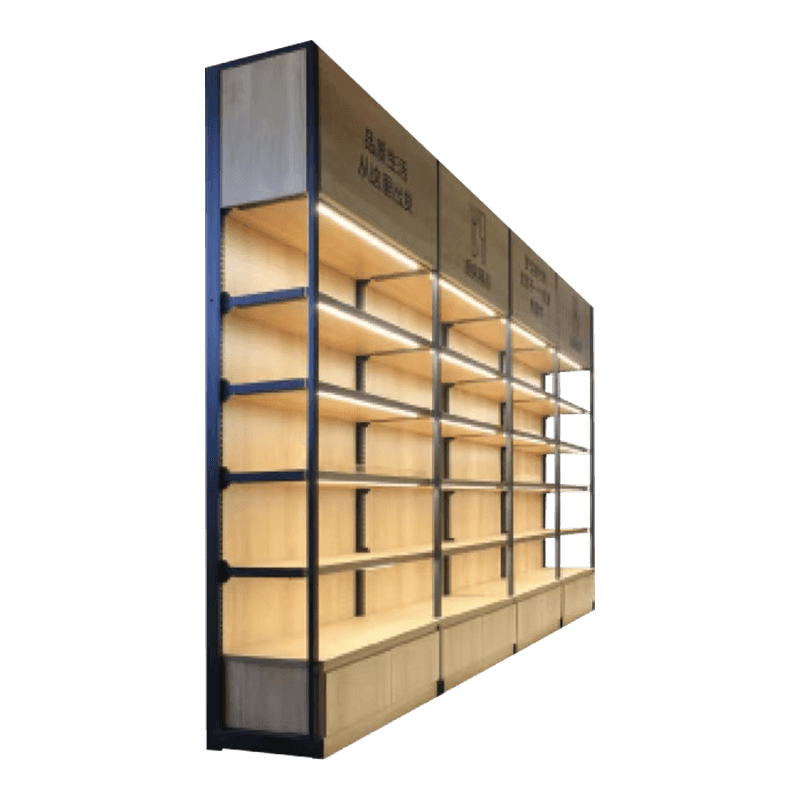
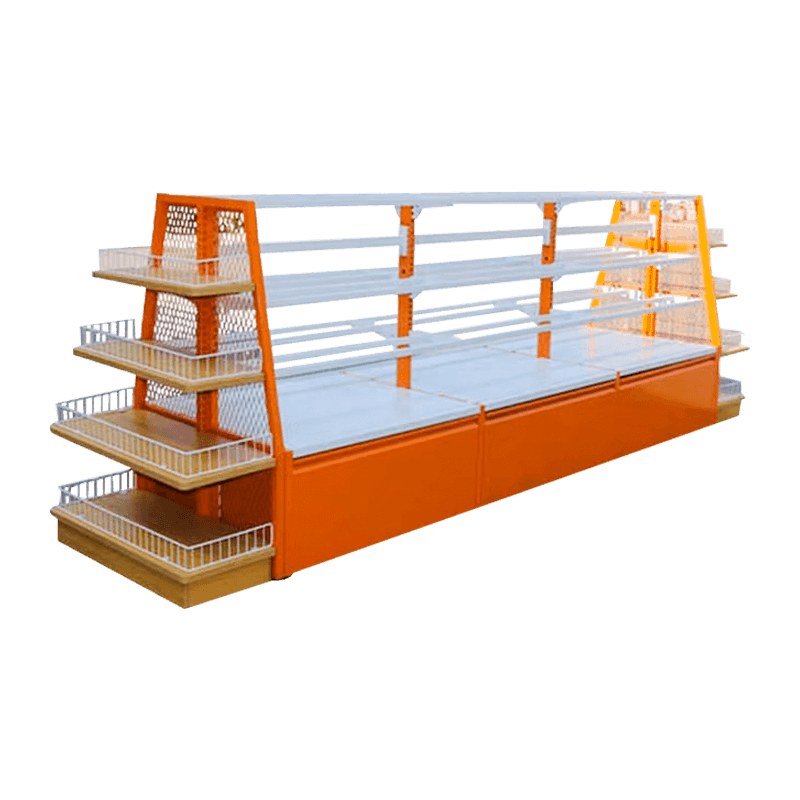
The shelving equipment in this zone has to balance two competing demands: maximum product density and easy customer access. Overcrowded shelves slow down shopping and create a cluttered impression; under-stocked shelves signal poor inventory management and leave margin on the table. Adjustable steel or steel-and-wood gondola shelving, with multiple tier configurations, allows operators to fine-tune facing width and shelf height for each product category.
Eye-level positioning — roughly 4 to 5 feet from the floor — is reserved for high-margin or promotional products. Below eye level works for bulk and staple items. End-cap displays at the aisle terminations are among the highest-converting positions in the store and should rotate regularly with seasonal or promotional stock.
Open-front display racks are preferred over enclosed cases in this zone because they reduce friction: customers can reach, inspect, and select without assistance. For stores with a significant grab-and-go food offering — sandwiches, pastries, or packaged hot food — refrigerated grab-and-go cases positioned at the edge of this zone extend the category without requiring a separate department. Browse our range of commercial display racks for snack and grab-and-go sections to find configurations suited to your floor plan and product mix.
The Cold Beverage and Refrigerated Zone
Chilled beverages are one of the primary reasons customers enter a convenience store. That makes the cold zone a powerful tool for controlling customer flow — and smart operators use it deliberately. Placing reach-in coolers and refrigerated cases along the rear wall forces shoppers to walk past the snack aisles and promotional displays to get to the drinks they came for. The return journey brings another pass through the store's highest-margin areas.
Equipment selection in this zone centers on reach-in glass-door coolers, open-front refrigerated cases for dairy and packaged chilled food, and in larger formats, walk-in beer caves. Glass-door units serve a dual purpose: they keep products at the correct temperature while functioning as illuminated display cases, making product selection fast and visually engaging even from a distance.
Cooler placement along side walls, rather than in the center of the floor, keeps aisles clear and sightlines open — important both for customer navigation and for loss-prevention visibility from the checkout position. Lighting inside cooler units should be bright and neutral to render product packaging colors accurately, since beverage purchase decisions are heavily influenced by brand recognition and packaging appeal.
For stores that offer fresh food programs or meal-kit components, a secondary refrigerated section near the food service station — separate from the beverage coolers — helps customers intuitively understand the product offer without cross-contaminating temperature zones in ways that compromise food safety.
The Tobacco and Wine Zone
Tobacco and alcohol represent two of the highest-margin product categories in convenience retail, but they also carry the most regulatory complexity. Display equipment in this zone must satisfy three requirements that do not apply elsewhere in the store: age-access restriction, legal compliance with local display regulations, and security against theft.
Tobacco products are typically housed in lockable display cabinets positioned behind or adjacent to the checkout counter, keeping them within the cashier's direct line of sight and control. The cabinet design matters: flip-up or sliding-door configurations allow rapid access during peak transaction periods without compromising the locked state between customer interactions. Shelving within the cabinet should accommodate the full SKU range — cigarettes, cigars, roll-your-own products, e-cigarettes, and accessories — with clear labeling for efficient cashier retrieval under time pressure.
Wine and spirits display in convenience retail takes a different form. Open shelving is common for spirits in markets where self-service alcohol retail is permitted, but placement should be consolidated in a clearly defined section with unambiguous age-verification signage. Locking glass-front display cases are preferred for premium spirits, both for security and for the perceived-value signal they send to customers. Explore our range of supermarket tobacco and wine display cabinets built to meet the operational and compliance demands of this category.
Regardless of local regulations, this zone benefits from positioning near the checkout rather than at the store perimeter, ensuring that all transactions involving age-restricted products take place within clear staff visibility.
The Fresh Produce Zone
Fresh fruit and vegetables were once considered incompatible with the convenience store format. That perception has shifted substantially over the past decade. Health-conscious consumers, urban store locations without nearby grocery options, and the rise of smaller-footprint retail have all pushed fresh produce into the c-store mainstream — and the category consistently drives basket size and visit frequency when merchandised well.
The equipment requirements for a fresh produce zone differ meaningfully from dry goods shelving. Fruit and vegetable display racks are typically open-basket or tiered-slope designs that allow good air circulation around produce while presenting items at angles that make them visually appealing and easy to inspect. Wicker or wood-effect finishes are common because they reinforce the "fresh and natural" message that the category is trying to communicate.
Placement at or near the store entrance is the standard approach — fresh, colorful produce at the entry creates a strong first impression and signals to customers that this is a store worth spending time in, not just a quick-stop for cigarettes and fuel. Refrigerated produce cases are necessary for leafy greens, pre-cut fruit, and packaged salads; ambient displays work for hardy fruits and root vegetables. Our supermarket fruit and vegetable display racks are designed to showcase fresh produce effectively while keeping restocking straightforward for store staff.
Choosing the Right Equipment for Each Zone
Zone design is ultimately an equipment decision. The layout you draw on paper only performs in the real store if the physical fixtures — counters, shelves, coolers, cabinets — are specified correctly for each zone's operational demands. A summary of the key equipment considerations by zone:
| Zone | Primary Equipment | Key Specification Priorities |
|---|---|---|
| Checkout | Checkout display counter | Ergonomic height, impulse-display tiers, integrated storage |
| Snack & Grab-and-Go | Gondola shelving, end-cap displays | Adjustable tiers, open-front access, high load capacity |
| Cold Beverage | Glass-door reach-in coolers | Interior lighting, energy efficiency, rear-loading access |
| Tobacco & Wine | Lockable display cabinets | Fast-access doors, cashier-side positioning, security |
| Fresh Produce | Open basket racks, refrigerated produce cases | Air circulation, visual presentation, easy restocking |
No two stores are identical. Floor dimensions, local product mix, customer demographics, and brand standards all influence which equipment configurations make sense for a given location. This is why equipment suppliers that offer both standard catalog products and custom-engineered solutions add the most value for operators running multiple formats or entering new markets.
Suzhou Juren Commercial Equipment Co., Ltd. manufactures the full range of fixtures needed to equip every zone described in this guide — from checkout display counters and gondola shelving to tobacco cabinets, fruit racks, and specialty display cases. With in-house R&D, production, and quality control, Juren supports both off-the-shelf orders and OEM/ODM projects for chains and retailers that require customized specifications. Explore our full range of retail checkout and display equipment to find the right solution for every zone in your store.