 English
 Español
 русский
 عربى
عربى 中文简体
中文简体
Content
- 1 What Actually Determines the Quality of a Display Rack
- 2 Display Rack Types Compared: Load, Cost and Lifespan
- 3 The Metric Most Buyers Skip: Cost-Per-Year of Service Life
- 4 Where Display Racks Are Actually Deployed Across Industries
- 5 A Practical Selection Process for Bulk Procurement
- 6 Maintenance and Compliance Considerations
- 7 Frequently Asked Questions About Display Racks
Display Racks: A Data-Driven Buying Guide for Retail and Commercial Procurement Teams
A procurement manager comparing three quotes for the same store fit-out will often see prices differ by 40% or more for what looks, on paper, like identical display racks. The gap rarely comes from margin alone. It comes from wall thickness, coating quality, load-bearing design, and warranty terms that never show up in a product photo. This guide breaks those variables down with real comparison data, so the next quote you read makes sense before you sign it.
Core takeaway: Display racks built from cold-rolled steel with a minimum 0.8mm wall thickness and a powder-coated finish typically deliver a 7 to 10-year service life under continuous commercial use, at roughly 60-75% of the total cost of ownership of lower-grade alternatives that need replacing every 2 to 3 years.
What Actually Determines the Quality of a Display Rack
Most buyers evaluate display racks by shelf count and footprint. Those matter for layout planning, but they say nothing about whether the unit will survive daily restocking, foot traffic vibration, and load cycling. Four engineering factors carry most of the weight.
Material Gauge
Steel gauge between 0.6mm and 1.2mm directly affects flex under load. Anything below 0.6mm on a weight-bearing shelf will visibly sag within months of active use.
Surface Treatment
Electrostatic powder coating outperforms wet paint in scratch resistance and corrosion protection, especially in humid or coastal retail environments.
Joint and Weld Design
Full-penetration welds at load-bearing joints resist metal fatigue far better than spot welds, which are the leading cause of rack failure under repeated restocking cycles.
Base Stability Ratio
The ratio between base footprint and top-shelf load determines tip-over risk. Freestanding units should keep this ratio under a 3:1 height-to-base-width proportion for retail floor safety.
Display Rack Types Compared: Load, Cost and Lifespan
The table below compares the four most commonly procured display rack categories across the metrics that actually affect a purchasing decision, based on typical commercial specifications used across supermarket, apparel and electronics retail fit-outs.
Figures represent typical commercial-grade ranges based on standard industry specifications; actual load capacity varies by manufacturer and shelf spacing.
The Metric Most Buyers Skip: Cost-Per-Year of Service Life
Sticker price is a poor predictor of value. A rack priced 20% lower but rated for half the service life will cost more over a five-year retail refit cycle. The chart below normalizes purchase price against expected lifespan to show real annualized cost per rack type.
Wire Rack
$18/yr
Slatwall
$27/yr
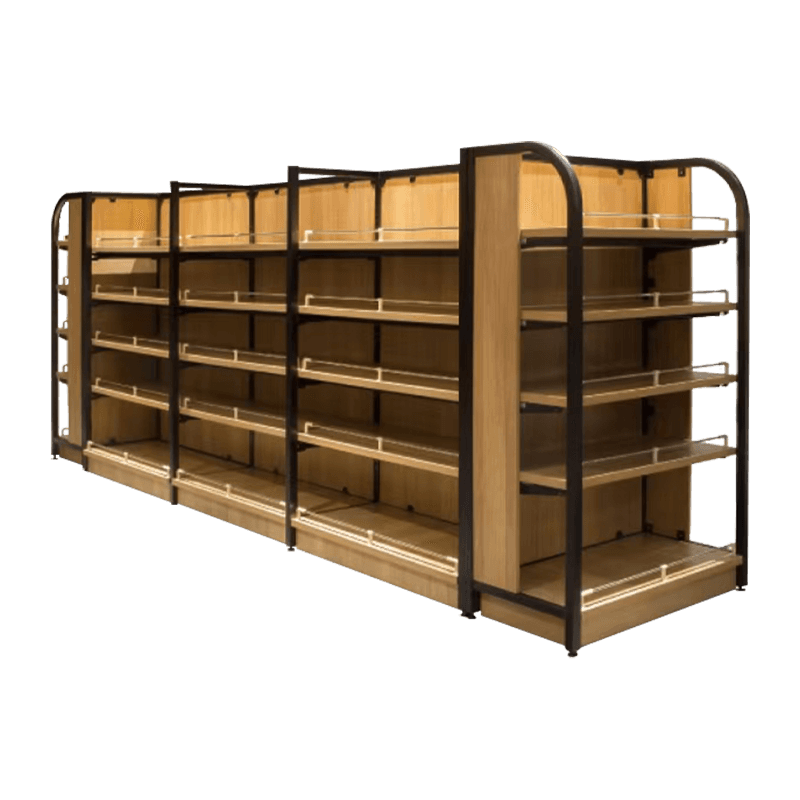
Gondola
$39/yr
Modular
$52/yr
Annualized cost per linear meter, calculated as purchase price divided by expected service life in years. Higher upfront cost units often carry a lower annualized cost due to extended lifespan.
Where Display Racks Are Actually Deployed Across Industries
Demand for display racks is not evenly spread across retail categories. Grocery and general retail continue to represent the largest share of commercial fixture procurement, followed closely by fashion and specialty retail, which prioritize modular and visually adaptable systems.
Grocery & Supermarket — 35%
Fashion & Apparel — 25%
Electronics & Hardware — 20%
Pharmacy & Convenience — 15%
Other (Exhibition, Warehouse-Retail) — 5%
Approximate distribution of commercial display rack demand by retail sector, based on typical fixture procurement patterns across mid-to-large format stores.
A Practical Selection Process for Bulk Procurement
Buyers sourcing racks for multi-store rollouts or new fit-outs generally follow a five-step evaluation sequence before placing a purchase order. Skipping steps two and four is the most common reason for costly mid-project rework.
Define Load and Space Requirements
Measure per-shelf weight expectations against your heaviest SKU category, not the average. Confirm floor-to-ceiling clearance and aisle width against local fire code minimums.
Request Material Certification
Ask suppliers for steel gauge specifications and coating type in writing, not just a product image. Gauge and coating are the two specs most frequently misrepresented in quotes.
Request a Sample or Factory Photo Batch
For orders above a few dozen units, a pre-shipment sample lets you physically test shelf deflection and weld quality before committing to full production.
Confirm Logistics and Lead Time
Knock-down (flat-pack) racks reduce freight volume by up to 60% compared to pre-assembled units, which matters significantly for multi-store or export orders.
Lock In Warranty and After-Sales Terms
A structural warranty of at least 2 years signals manufacturer confidence in the weld and material quality. Anything shorter warrants a closer look at build specs.
Maintenance and Compliance Considerations
Even well-built display racks lose structural integrity faster than expected when maintenance is skipped. Three practices extend service life meaningfully with minimal labor cost.
Quarterly Weld and Joint Inspection
Check for hairline cracks at connector joints, particularly on gondola end caps and modular corner brackets, which bear the highest cyclical stress.
Load Redistribution
Rotate heavier merchandise across shelf positions periodically to avoid concentrated deflection on a single shelf level over time.
Compliance with Local Fire and Safety Codes
Verify aisle clearance and anti-tip anchoring requirements against local building codes, especially for freestanding units above 1.8 meters in height.
Frequently Asked Questions About Display Racks
What steel gauge is recommended for a heavy-duty display rack?
For loads above 100kg per shelf, a gauge of 0.9mm to 1.2mm cold-rolled steel is generally recommended to prevent visible sag over repeated loading cycles.
How long do commercial display racks typically last?
Well-built gondola and modular racks typically last 8 to 15 years under continuous commercial use, while lighter wire and slatwall units average 4 to 8 years depending on load and humidity exposure.
What is the difference between powder coating and wet paint finishes?
Powder coating creates a thicker, more durable surface layer that resists chipping and corrosion significantly better than sprayed wet paint, making it the preferred finish for high-traffic retail environments.
Are knock-down (flat-pack) display racks as sturdy as pre-assembled units?
When manufactured with quality bolt-and-bracket connectors, knock-down racks match pre-assembled units in load capacity while significantly reducing shipping volume and cost for multi-store rollouts.
How do I calculate the total cost of ownership for display racks?
Divide the total purchase price, including freight and installation, by the expected service life in years. Compare this annualized figure across suppliers rather than relying on upfront unit price alone.
What warranty period should I expect from a reliable manufacturer?
A structural warranty of at least 2 years is a reasonable industry benchmark. Shorter warranty periods often indicate lower-grade materials or reduced confidence in weld durability.
Can display racks be customized for specific retail categories?
Yes. Shelf spacing, upright height, hook density and finish color can all be adjusted to match category-specific merchandising needs, from bulk grocery packaging to lightweight accessories.
How often should display racks be inspected for safety?
A quarterly visual inspection of joints, welds and base anchoring is recommended for high-traffic retail floors, with a more thorough structural check annually.
Choosing the right display racks comes down to matching material specification and load design to your actual merchandising needs, not just comparing sticker prices.
Suzhou Juren Commercial Equipment Co., Ltd. supports procurement teams with detailed material specifications, sample units, and flat-pack logistics options for both single-store and multi-site retail fit-outs. Contact our team to discuss load requirements and receive a tailored quote for your next project.