 English
 Español
 русский
 عربى
عربى 中文简体
中文简体
Content
Why Fixed Checkout Counters Are Holding Supermarkets Back
A fixed checkout counter is bolted to a floor plan the day it's installed, and it stays there whether the store's needs change or not. When a supermarket wants to add a lane for a holiday rush, trial a self-checkout zone, or simply rearrange the front end for better traffic flow, a fixed counter turns a one-afternoon adjustment into a construction project.
Retrofitting concrete anchors, rerouting power and data lines, and coordinating downtime all add cost before a single customer is served. For stores testing new formats — pop-up locations, seasonal markets, or temporary footprints during a renovation — that inflexibility is a real operational drag, not just an inconvenience.
Store planners increasingly need checkout infrastructure that moves as fast as their business does. That's the gap mobile belt checkout counters were built to close.
What Is a Mobile Belt Checkout Counter
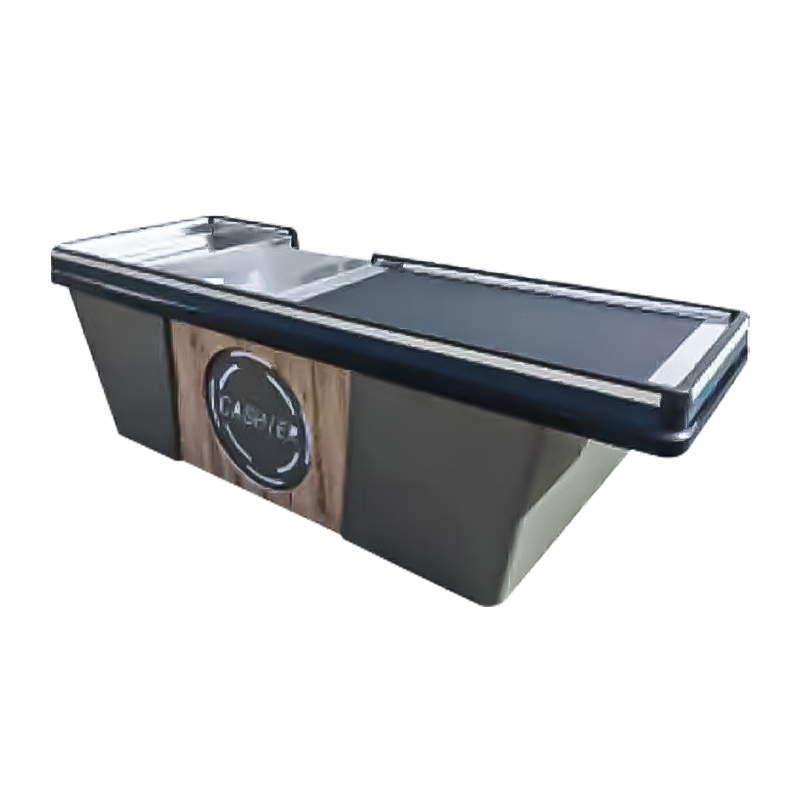
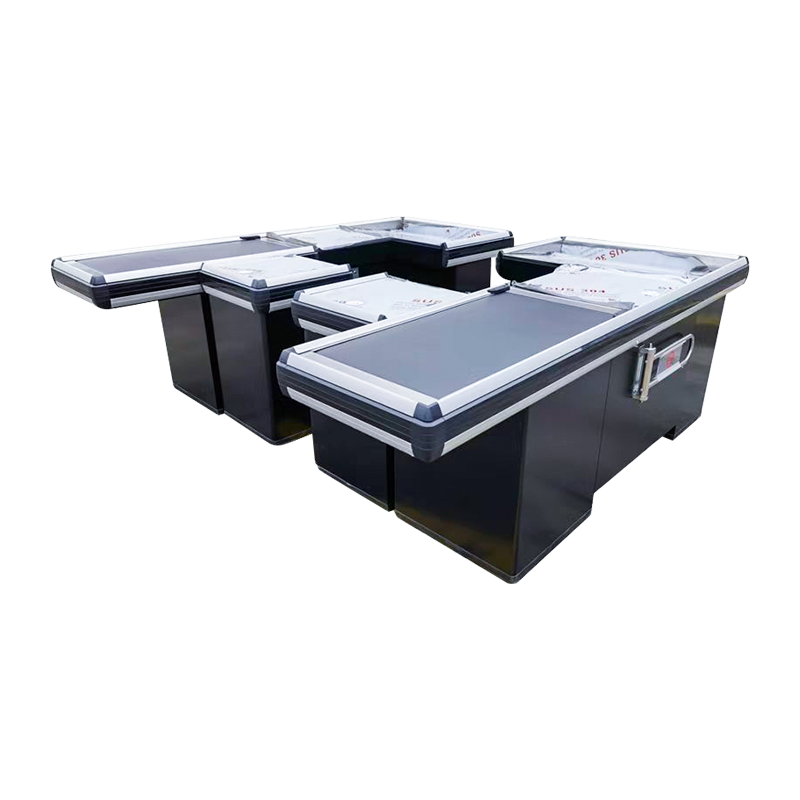
A mobile belt checkout counter combines the standard components of a supermarket checkstand — a conveyor belt, scanning and bagging zones, and space for a POS terminal — with a wheeled, freestanding base instead of a permanent floor mount. The counter can be rolled to a new position, locked in place, and made fully operational within minutes.
The core distinction from a traditional checkstand isn't the belt itself; it's the chassis underneath it. Where a fixed counter relies on a built-in frame anchored to the floor, a mobile unit sits on a caster base engineered to carry the same load — motor, belt assembly, cash drawer, and staff — without sacrificing stability during scanning and bagging.
This makes the format particularly useful for stores that need checkout capacity to flex with demand rather than staying fixed at a single configuration year-round.
Key Design Features That Matter
Not every mobile checkout unit is built for daily supermarket volume. A handful of design details separate a counter that holds up under real traffic from one that becomes a maintenance headache within a year.
- Locking casters: Heavy-duty swivel wheels with a positive lock keep the unit stationary during operation, preventing drift while items move across the belt.
- Belt speed and sensors: Adjustable belt speed, paired with photo-eye or weight sensors, lets the counter start and stop automatically as items are placed and cleared, reducing manual control for the cashier.
- Load-rated frame: The chassis needs a steel or reinforced composite frame rated for continuous daily loading, not just a static display weight.
- Corrosion- and scratch-resistant surfaces: Stainless steel or powder-coated finishes hold up against spills, cleaning chemicals, and constant product contact.
- Modular dimensions: Configurable belt length and counter width allow the same base design to fit express lanes, standard lanes, or wider bagging areas.
Together, these features determine whether a mobile counter performs like a permanent fixture or feels like a temporary workaround.
Ergonomic and Operational Benefits for Staff
Checkout work is repetitive by nature, and prolonged standing combined with reaching and twisting is a documented source of musculoskeletal strain among retail cashiers. Federal workplace guidance for grocery stores recommends positioning scanners and conveyor surfaces at a consistent height, and keeping frequently used tools within a cashier's natural reach zone, precisely to reduce that strain.
A mobile belt counter makes it easier to meet those recommendations in practice. Because the entire unit is a self-contained, pre-configured assembly, belt height, scanner placement, and bagging space stay consistent every time the counter is relocated — there's no re-measuring or improvising a new layout each time the front end changes.
Operationally, that consistency also shortens training time. Staff moving between lanes encounter the same working posture and reach distances at every station, rather than adapting to a patchwork of counter heights installed at different points over the years.
Where Mobile Checkout Counters Deliver the Most Value
The format earns its keep in situations where a fixed counter's inflexibility becomes a real cost. A few scenarios stand out.
- Seasonal and promotional periods: Holiday volume or a limited-time promotion often calls for extra checkout capacity for a few weeks, not a permanent addition.
- Pop-up and temporary retail: Farmers' markets, seasonal storefronts, and short-term leases need checkout infrastructure that can be set up and struck without construction work.
- Store renovations: While a front end is being rebuilt, a mobile counter keeps transactions moving without waiting for a permanent installation to finish.
- Layout testing: Chains piloting a new store format can trial checkout placement in a live environment before committing to a fixed layout.
In each case, the value isn't just mobility for its own sake — it's avoiding the downtime and capital cost that come with treating every checkout change as a construction project.
Choosing the Right Supplier for Your Store
Once the case for a mobile belt checkout counter is clear, the harder question is which supplier can actually deliver on it. A few checks are worth running before placing an order.
Confirm the frame material and load rating match your expected daily transaction volume, not just a showroom demo. Ask whether belt and casing components meet food-contact safety standards relevant to your region, since checkout surfaces regularly come into contact with packaged food items. Check customization options for belt length and counter width — a supplier offering only fixed sizes limits how well the unit fits your actual lane space. Finally, ask about lead times and after-sales parts availability; a mobile counter that can't be quickly repaired defeats the purpose of buying flexible equipment in the first place.
A supplier that can answer all four of those questions directly, with specifications rather than generalities, is usually the one worth building a long-term equipment relationship with.