 English
 Español
 русский
 عربى
عربى 中文简体
中文简体
A 48-inch cantilever arm rated at 2,000 lb does not mean the rack can hold 2,000 lb per level. That number describes the arm alone, under a uniform load placed at a specific distance from the column. The actual system capacity is usually lower, and it is determined by the weakest link among the arm, the column, the base, and the floor.
Core conclusion: Cantilever rack capacity is a system limit, not a component rating. Always compare the arm capacity, column capacity, base capacity, and floor capacity, then apply the lowest value.
Content
- 1 How Cantilever Rack Capacity Is Calculated
- 2 Arm, Column, and Base: Which Limit Governs?
- 3 Load Distribution and Deflection: The Hidden Capacity Killers
- 4 Industry Applications and Capacity Expectations
- 5 How to Specify Capacity Without Overbuying
- 6 Maintenance, Inspection, and Compliance
- 7 Retail Storage: When Cantilever Principles Apply
How Cantilever Rack Capacity Is Calculated
Engineers calculate capacity in stages. Each stage produces a maximum allowable load, and the final published capacity is the smallest of those numbers. The process starts with the arm, moves to the column, then checks the base and the floor.
Arm capacity
Arm capacity depends on arm length, steel profile, gauge, and the load's center of gravity. A standard 48 x 4 inch arm often supports around 2,000 lb when the load is evenly distributed. Heavy-duty arms can reach 3,400 lb per arm, but that figure assumes a specific load position and uniform contact. A point load near the tip can reduce the allowable weight dramatically.
Column capacity
Columns carry the cumulative load from all arms. Height matters: a tall column can buckle under a load that a short column handles easily. Bracing, base plates, and anchor bolts also affect how much vertical load the column can transfer to the floor.
Base and floor capacity
The base distributes the column load to the floor. A concentrated load on a thin slab can crack the concrete. Anchoring is part of the calculation because an unanchored rack can tip before the steel reaches its limit.
Arm, Column, and Base: Which Limit Governs?
The governing limit is the lowest of the three main components, but the relationships are not always intuitive. The table below summarizes what each component measures and what tends to reduce its rated capacity.
Load Distribution and Deflection: The Hidden Capacity Killers
Uniform loads and point loads behave differently. A 2,000 lb uniform load spread across a 48-inch arm creates a different bending moment than a 2,000 lb point load placed at the tip. Deflection limits also matter: a rack may hold the load without collapsing, but excessive sag can make the rack unsafe for repeated use.
The chart above illustrates relative capacity, not exact engineering values. In practice, a load placed at the tip can cut the allowable arm capacity by half or more compared with a uniform load. Deflection limits are often set by the rack manufacturer or by the applicable safety standard.
Industry Applications and Capacity Expectations
Cantilever racks appear in several industries, and each one places different demands on capacity. Lumber yards often need long arms and high per-arm capacity. Building material suppliers handle heavy, dense loads. Pipe and tubing storage requires uniform support to prevent sag. Retail backrooms may use lighter cantilever arms or heavy-duty display racks for long items.
These percentages are illustrative. The key point is that capacity requirements follow the load, not the industry label. A retail backroom storing long fixtures may need a different capacity profile than a lumber yard storing dense hardwood.
How to Specify Capacity Without Overbuying
Overbuying capacity wastes money; underbuying creates risk. Use a structured process to match the rack to the load.
1. Define the load
Record the weight, length, and shape of every item. Note whether loads are uniform or concentrated.
2. Measure the space
Check available height, aisle width, and column spacing. Taller racks may reduce column capacity.
3. Check the floor
Confirm slab thickness, concrete strength, and anchor compatibility. A structural engineer may be needed.
4. Request engineered drawings
Ask for capacity calculations that show the governing limit and the assumed load positions.
5. Verify labels
After installation, confirm that load plaques match the drawings and that anchors are torqued correctly.
Maintenance, Inspection, and Compliance
Capacity is not permanent. Corrosion, bent arms, loose anchors, and impact damage can reduce the safe working load. ANSI MH16.1 and similar standards require clear load plaques and regular inspections. A practical program includes:
- Visual inspection of arms, columns, and base plates for deformation or cracks.
- Checking anchor bolts for tightness and signs of concrete spalling.
- Confirming that load plaques are legible and match the current configuration.
- Documenting repairs and replacing damaged components with manufacturer-approved parts.
Inspections should be more frequent in cold storage, outdoor yards, and high-traffic areas. Any rack that has been hit by a forklift should be taken out of service until an engineer approves it.
Retail Storage: When Cantilever Principles Apply
Retail backrooms and display areas often use cantilever-style arms or heavy-duty display racks for long or bulky items. The same capacity logic applies: check the arm, the upright, and the floor. For a practical buyer's guide to commercial display racks, see our commercial display racks buyer's guide.
If your project involves retail display or backroom storage rather than industrial cantilever arms, compare the load ratings on our multifunctional durable display rack.
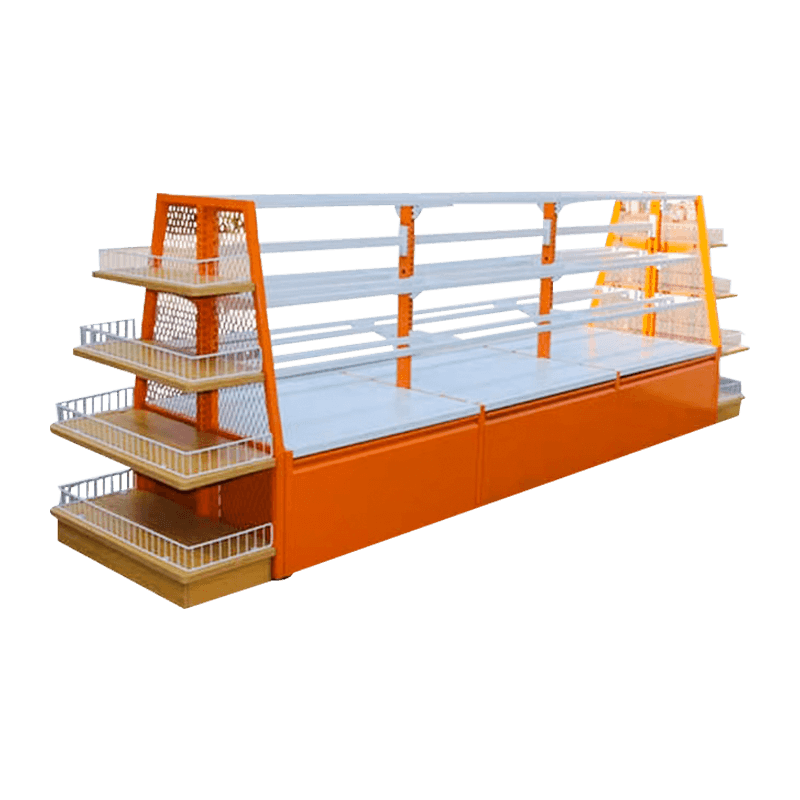 Heavy-Duty Retail Display Rack for SupermarketsThis heavy-duty retail display rack is constructed from high-strength steel and engineered to bear substantial loads across years of continuous use. Whether displaying...View Product →
For capacity questions on your specific project, contact our team.
Cantilever rack capacity is a system property. The arm rating is only the starting point. By checking the column, base, floor, load distribution, and deflection limits, you can specify a rack that handles the load safely without paying for capacity you do not need. Keep the load plaques visible, inspect regularly, and treat any damage as a capacity reduction until an engineer says otherwise.