 English
 Español
 русский
 عربى
عربى 中文简体
中文简体
Content
- 1 What a Checkout Display Counter Actually Has to Do
- 2 Checkout Counter Materials: A Side-by-Side Comparison
- 3 The Hidden Metric Most Buyers Skip: Impulse Zone Height
- 4 Where Checkout Counters Are Actually Being Deployed
- 5 Selecting the Right Counter: A Step-by-Step Procurement Flow
- 6 ROI: Why the Counter Pays for Itself Faster Than Most Fixtures
- 7 Maintenance and Compliance Considerations
- 8 Frequently Asked Questions
- 9 Summary: Treat the Checkout Counter as a Sales Fixture, Not Furniture
Convenience Store Checkout Display Counters: What Actually Moves Sales in 2026
A shopper stands at the register for an average of 38 to 90 seconds. That window is the single most valuable piece of retail real estate a convenience store owns, and it is almost entirely occupied by one fixture: the convenience store checkout display counter. Get the layout, material, and merchandising zones wrong, and the store quietly loses 5 to 15 percent of its potential impulse revenue every single day, without a single alarm going off. This article breaks down the engineering, data, and procurement logic behind checkout counters that actually convert waiting time into basket growth.
Core Conclusion
Checkout counters built with tiered impulse zones, stainless steel wear surfaces, and modular scanner integration consistently outperform flat single-tier counters by 18–27% in add-on sales, while cutting front-end queue time by roughly 20% when paired with a dual-flow (cashier + self-checkout) footprint.
Suzhou Juren Commercial Equipment has manufactured checkout and display fixtures for convenience retail chains, fuel-mart operators, and supermarket groups across more than 40 countries. The observations below draw on that fabrication experience alongside current industry data on front-end retail design.
What a Checkout Display Counter Actually Has to Do
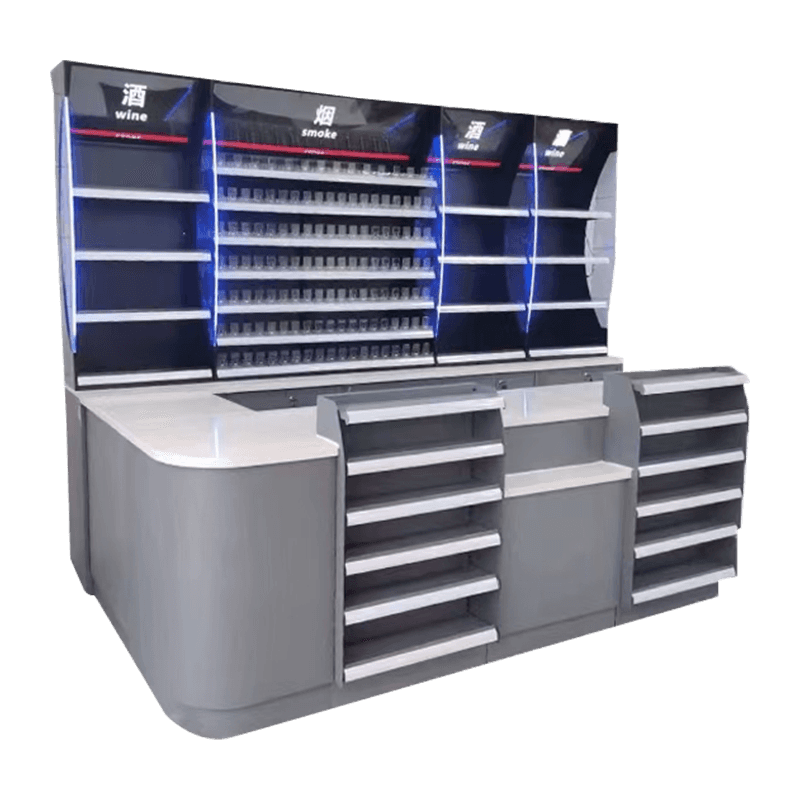
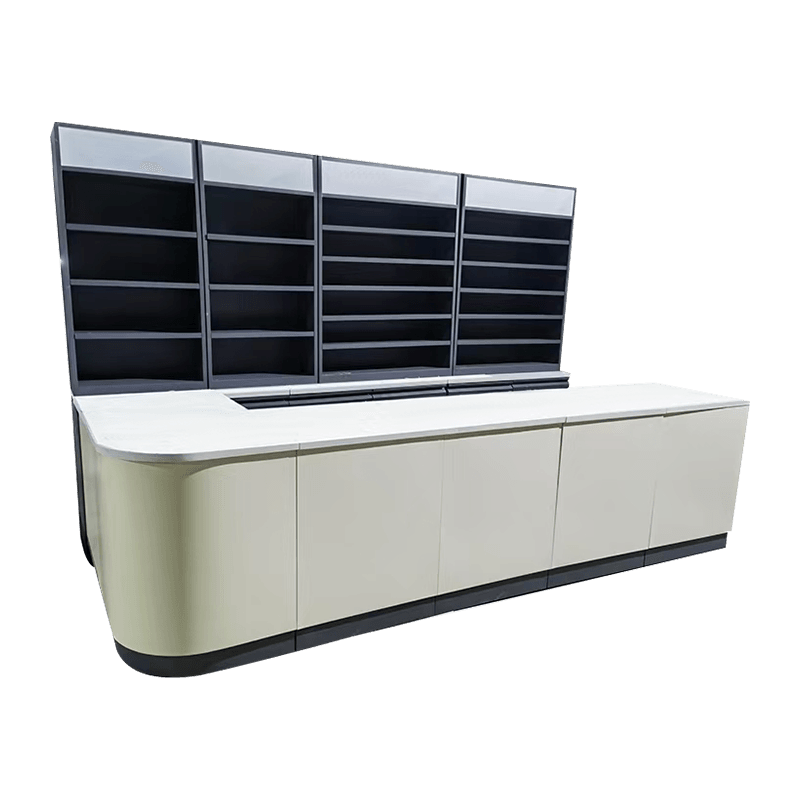
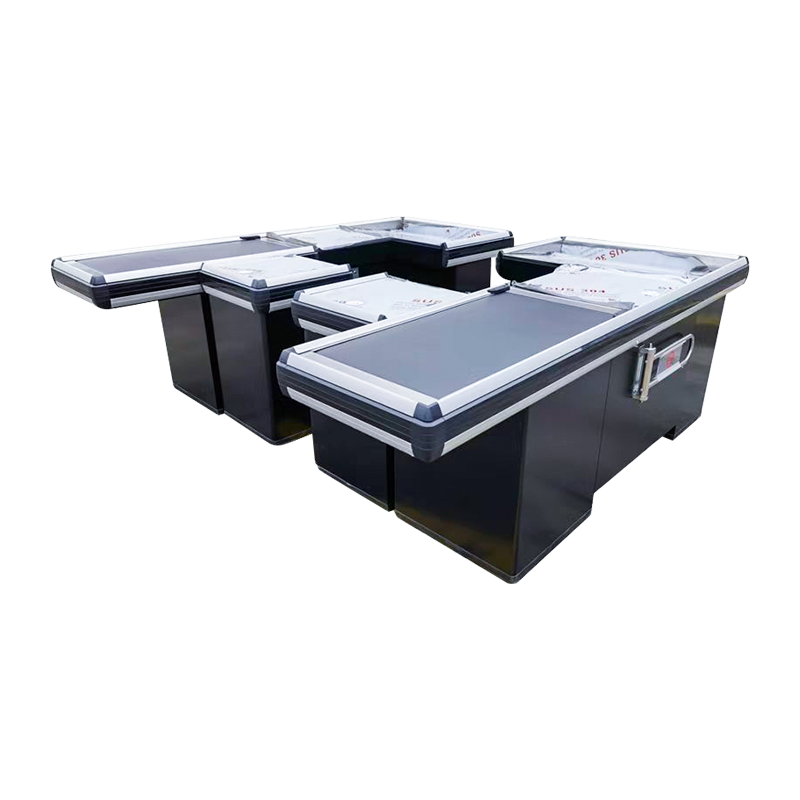
A checkout display counter is not a table with a cash drawer bolted to it. It is a piece of load-bearing furniture that has to survive constant abrasion, hide cabling and POS wiring, support a scale or scanner, and simultaneously function as a merchandising shelf for candy, snacks, lighters, batteries, and seasonal impulse items — all within a footprint that is usually under 1.8 meters wide. Four functional layers determine whether a counter succeeds at this job.
Structural Core
A welded steel or reinforced MDF frame rated for a static load of 150–200 kg on the worktop, so scanners, scales, and payment terminals don't flex the surface over time.
Wear Surface
201/304 stainless steel, compact laminate (HPL), or powder-coated panels — the layer that takes daily abrasion from scanning motions, coins, and cleaning chemicals.
Impulse Display Tiers
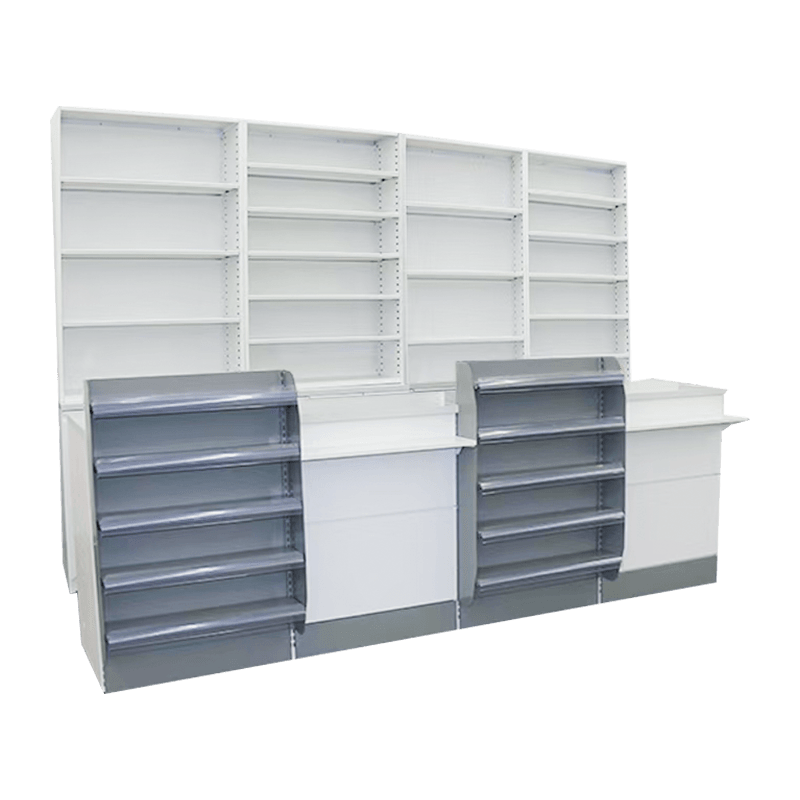
Angled or stepped shelving facing the customer queue, typically sized for confectionery, snack bars, and small accessory packaging at eye level.
Cable & POS Management
Internal raceways and rear access panels for register cabling, card readers, receipt printers, and under-counter security drawers.
Checkout Counter Materials: A Side-by-Side Comparison
Material choice drives roughly 60% of a counter's total lifecycle cost. Here is how the four dominant options compare across the metrics that matter to a purchasing manager.
Comparison based on typical 8–10 year service-life expectations for high-frequency retail checkout use.
The Hidden Metric Most Buyers Skip: Impulse Zone Height
Retailers obsess over counter width and cabling, but the single most overlooked variable is impulse shelf height relative to average eye level. Display tiers placed between 90 and 130 cm from the floor capture measurably more attention during the checkout dwell time than tiers above or below that band, because that range sits within a standing adult's natural downward gaze without requiring a head tilt.
Relative Impulse-Purchase Capture Rate by Shelf Height Band
Illustrative capture-rate index based on standard eye-level merchandising benchmarks used in front-end fixture design.
Practically, this means a counter with a single flat display tray at counter height is leaving inventory space and revenue on the table. A tiered, angled tray at the correct band — combined with a secondary lower tray for bulkier items like bottled drinks — does the merchandising work without adding floor footprint.
Where Checkout Counters Are Actually Being Deployed
Order volume across convenience retail segments shows a fairly consistent split. Understanding where your format sits helps determine which configuration — compact single-till, dual-flow, or fuel-forecourt — makes sense for a rollout.
Approximate distribution of checkout counter deployment across convenience retail formats, based on current fixture order patterns.
Selecting the Right Counter: A Step-by-Step Procurement Flow
Most fixture procurement mistakes happen because store dimensions and POS hardware specs are locked in after the counter design, not before. Reversing that order avoids costly rework.
Measure the front-end footprint
Record aisle clearance, queue-line length, and entry/exit sightlines before choosing counter width.
Lock in POS and scanner hardware specs
Cutouts for scanners, scales, and card terminals need to be built into the counter shell, not retrofitted.
Choose the wear surface for your traffic level
High-frequency, 24-hour stores justify stainless steel; lower-traffic branded formats can use HPL laminate.
Design the impulse display tiers around your SKU mix
Match tray depth and spacing to your actual candy, snack, and accessory dimensions, not a generic template.
Confirm delivery, assembly, and lead-time terms
Custom checkout counters typically run 25–45 days production plus freight; plan store openings accordingly.
ROI: Why the Counter Pays for Itself Faster Than Most Fixtures
Unlike shelving in the back of the store, a checkout counter sees 100% of daily foot traffic. A mid-size c-store processing 400 transactions a day, with an average impulse add-on rate improvement of just 8% after upgrading to a tiered, properly lit counter, adds a meaningful stream of incremental revenue with no additional labor cost. Because the fixture itself is a one-time capital purchase with an 8–10 year service life on stainless steel builds, most operators recover the counter's cost well within the first operating year purely from the uplift in add-on sales, before even counting the efficiency gains from faster transaction throughput.
Maintenance and Compliance Considerations
A checkout counter that looks premium on delivery day but degrades within eighteen months costs more than the cheaper option it replaced. A few practical standards worth specifying at the procurement stage:
- Seams and edge banding should be sealed against liquid ingress — spilled drinks and cleaning solution are the leading cause of counter delamination.
- Stainless steel surfaces should carry a brushed or matte finish rather than mirror polish, which shows fingerprints and scratches far faster under daily handling.
- Under-counter cabling should be routed through lockable access panels to satisfy electrical safety inspections in most jurisdictions.
- Corner radii on customer-facing edges should meet local retail fixture safety guidance to reduce injury risk in high-traffic queue zones.
- Powder-coated steel components should be re-inspected annually for chip points where trolleys or baskets repeatedly make contact.
Frequently Asked Questions
What is the standard width for a convenience store checkout counter?
Most single-till counters run between 1.2 and 1.8 meters wide. Dual-flow layouts combining a cashier station with a self-checkout unit typically need 2.4 to 3.2 meters of front-end space.
Is stainless steel worth the extra cost over laminate?
For stores running 24 hours or handling high transaction volume, yes. Stainless steel resists heat, moisture, and chemical cleaners far better than laminate, extending service life by several years in high-frequency environments.
Can checkout display counters be customized for branding?
Yes. Panel color, laminate finish, logo lightboxes, and impulse tray sizing can all be specified to match a chain's brand standards during the manufacturing stage.
How long does production and delivery usually take?
Custom counter orders typically take 25 to 45 days to manufacture, plus ocean or land freight time depending on destination. Standard configurations can ship faster from existing stock designs.
What impulse items sell best at the checkout counter?
Confectionery, single-serve snacks, chewing gum, small battery packs, lighters, and phone accessories consistently perform best in the primary display tier closest to eye level.
Do checkout counters need to accommodate self-checkout terminals?
Increasingly, yes. Many operators now specify a modular counter frame that can hold either a staffed till or a self-checkout terminal, allowing the format to shift based on staffing and traffic without replacing the fixture.
How do I clean and maintain a stainless steel checkout counter?
Use a non-abrasive cleaner and wipe in the direction of the brushed finish. Avoid bleach-based products on visible seams, and inspect edge banding and joints quarterly for early signs of wear.
Can one manufacturer supply both the checkout counter and the display shelving?
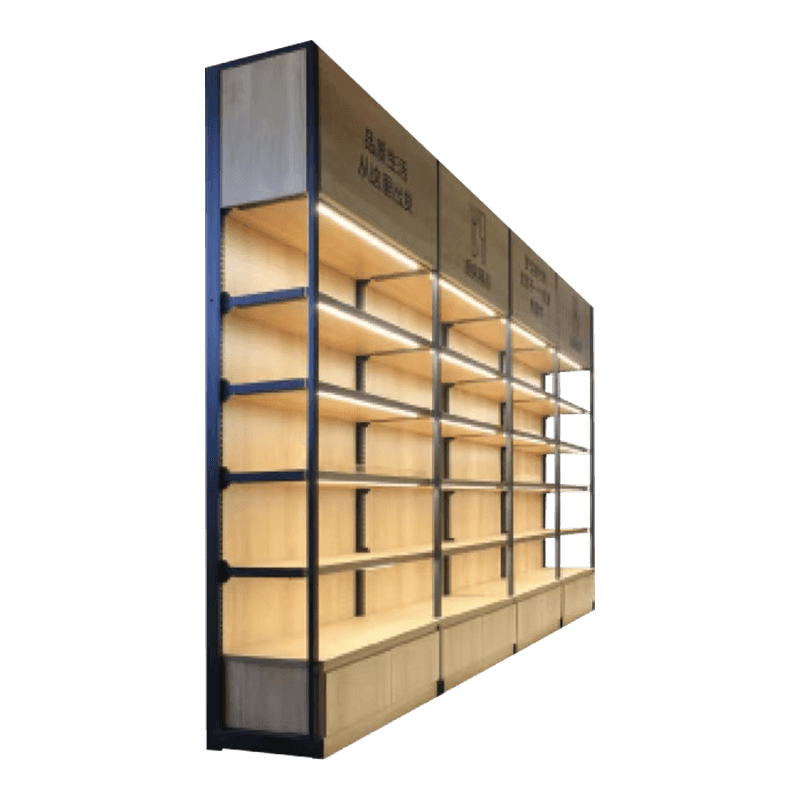
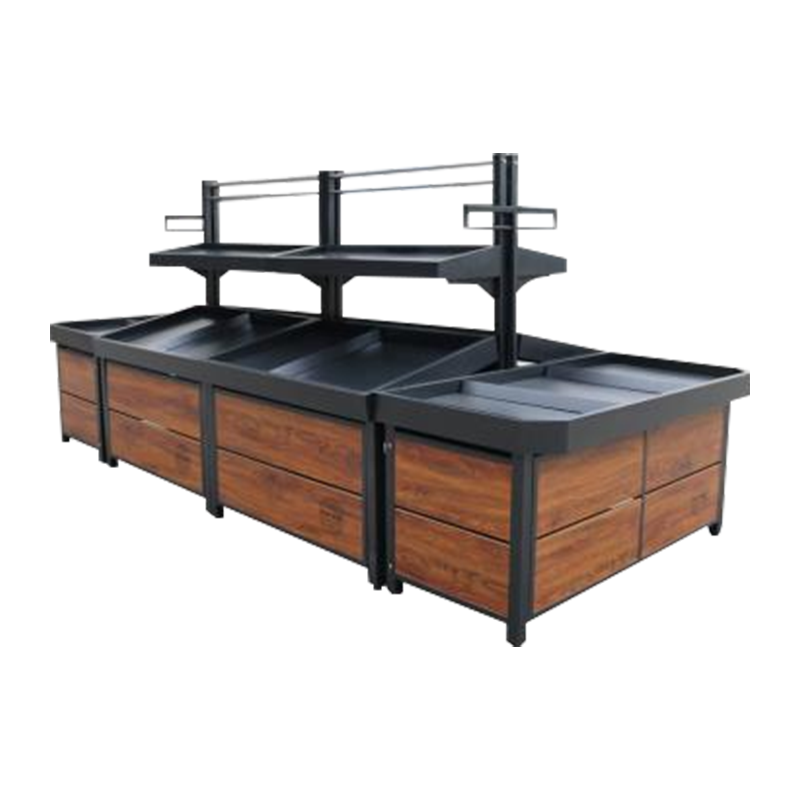
Yes, and it is usually preferable. Sourcing the counter and adjacent display shelving from one manufacturer keeps finishes, dimensions, and branding consistent across the entire front-end layout.
Summary: Treat the Checkout Counter as a Sales Fixture, Not Furniture
A well-specified convenience store checkout display counter does three jobs at once: it processes transactions efficiently, protects the store's daily operating equipment, and quietly drives impulse revenue during the highest-attention moment in the customer's visit. The material, tier height, and modularity decisions made at the procurement stage determine whether that fixture earns its keep for a decade or becomes a maintenance liability within two years.
Suzhou Juren Commercial Equipment designs and manufactures checkout display counters, display racks, and complete front-end fixture packages for convenience stores, supermarkets, and fuel-mart operators worldwide. For store layouts, material samples, or a custom counter quote, reach out to the Juren engineering team directly.