 English
 Español
 русский
 عربى
عربى 中文简体
中文简体
Content
- 1 Why the Right Commercial Display Rack Makes or Breaks Your Retail Space
- 2 What Sets a Quality Commercial Display Rack Apart
- 3 The Case for Adjustable Shelf Display Racks in Retail
- 4 Choosing a Commercial Shelving Unit for Grocery Store Environments
- 5 Shopping Mall Applications: Where Aesthetics and Function Must Align
- 6 Key Features to Evaluate Before You Buy
- 7 Getting the Most Out of Your Display Rack Investment
Why the Right Commercial Display Rack Makes or Breaks Your Retail Space
Walk into any high-performing supermarket, shopping mall, or specialty store, and you'll notice one thing immediately: the merchandise is easy to find, easy to reach, and visually organized in a way that naturally pulls you through the space. That's not an accident—it's the result of choosing the right commercial display rack. Far from being a simple storage solution, a well-designed display rack is a merchandising tool that influences how customers perceive your brand, how long they browse, and ultimately, how much they buy. This guide breaks down what to look for, how to match racks to your environment, and why material and adjustability are the two factors that matter most.
What Sets a Quality Commercial Display Rack Apart
Not all display racks are built equally. In a commercial setting, fixtures take a beating—daily restocking, heavy product loads, cleaning routines, and constant customer interaction. A rack that looked fine in a catalog can quickly become a liability on the floor if it lacks the structural integrity to handle real-world demands.
The best commercial display racks share several key characteristics. First and foremost is frame strength. High-strength steel frames provide the structural backbone necessary to support heavy loads without warping, bending, or deforming over time. Unlike aluminum or plastic alternatives, steel maintains its shape even under sustained pressure, making it the preferred material for grocery stores, supermarkets, and any environment where shelves are regularly loaded to capacity.
Surface treatment is equally important. A professional-grade commercial display rack uses rust-resistant and wear-resistant coatings that protect the fixture from moisture, cleaning chemicals, and physical abrasion. In environments like fresh food sections or pharmacy aisles where surfaces are wiped down frequently, a durable coating preserves the clean, professional appearance that reflects well on your brand. Bare or poorly treated metal will corrode and chip, creating a visual that undermines product presentation.
The Case for Adjustable Shelf Display Racks in Retail
Retail inventory is never static. Seasons change, promotions rotate, and new product lines come in at different sizes and heights. An adjustable shelf display rack for retail is not a luxury—it's a practical necessity for any store that wants to stay flexible without investing in entirely new fixtures every time the product mix shifts.
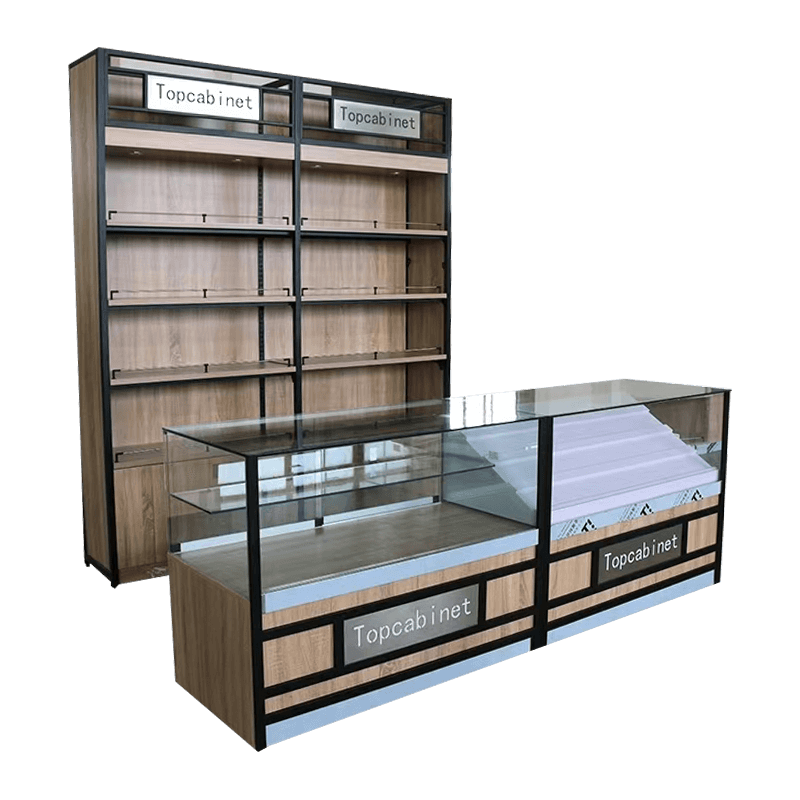
Adjustable shelving works by allowing users to reposition shelf brackets at different heights along vertical uprights. This simple mechanism has a significant impact on how efficiently a store can use its floor space. Consider the difference between displaying tall 1.5-liter beverage bottles versus small cosmetic tubes. Without adjustable shelves, you either waste vertical space above shorter items or cram taller products into spaces where they don't fit properly. With adjustable shelving, you reconfigure in minutes.
Here's a quick look at how adjustable shelf spacing translates to product compatibility:
| Shelf Spacing | Best For | Typical Retail Setting |
| 10–15 cm | Small cosmetics, accessories, snacks | Pharmacy, beauty store |
| 20–30 cm | Boxed goods, canned food, folded apparel | Supermarket, convenience store |
| 35–50 cm | Beverage bottles, large containers, shoe boxes | Grocery store, sporting goods |
| 50 cm+ | Bulk items, large packaged goods | Wholesale, warehouse retail |
This flexibility also reduces the need to purchase multiple rack types for different departments. A single adjustable shelf display rack for retail can serve across categories, which simplifies procurement, lowers inventory costs, and makes store resets faster and easier for your staff.
Choosing a Commercial Shelving Unit for Grocery Store Environments
Grocery stores present one of the most demanding use cases for commercial shelving. Products are heavy, restocking happens multiple times a day, and aisles must remain navigable even during peak hours. Selecting the right commercial shelving unit for grocery store settings requires attention to several factors beyond basic aesthetics.
Load-Bearing Capacity
Grocery shelves regularly hold canned goods, bulk beverages, and packaged dry foods—all of which add up quickly. A shelving unit rated for at least 150–200 kg per shelf is considered the minimum for a grocery environment. High-strength steel construction ensures the unit won't bow or shift under sustained weight, which matters both for product safety and for maintaining the visual alignment of your shelf displays.
Back Panels and Side Barriers
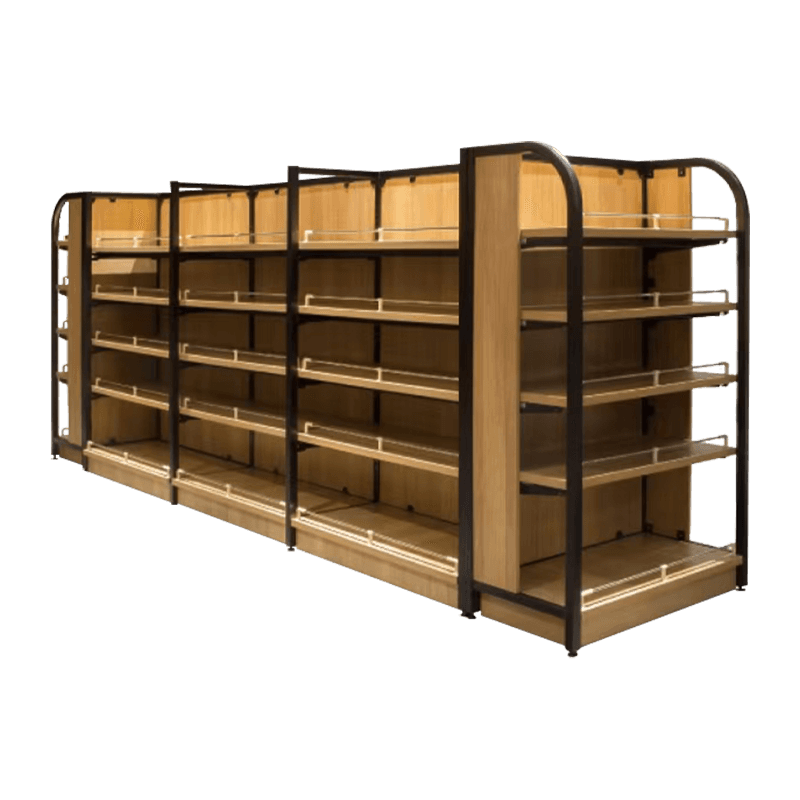
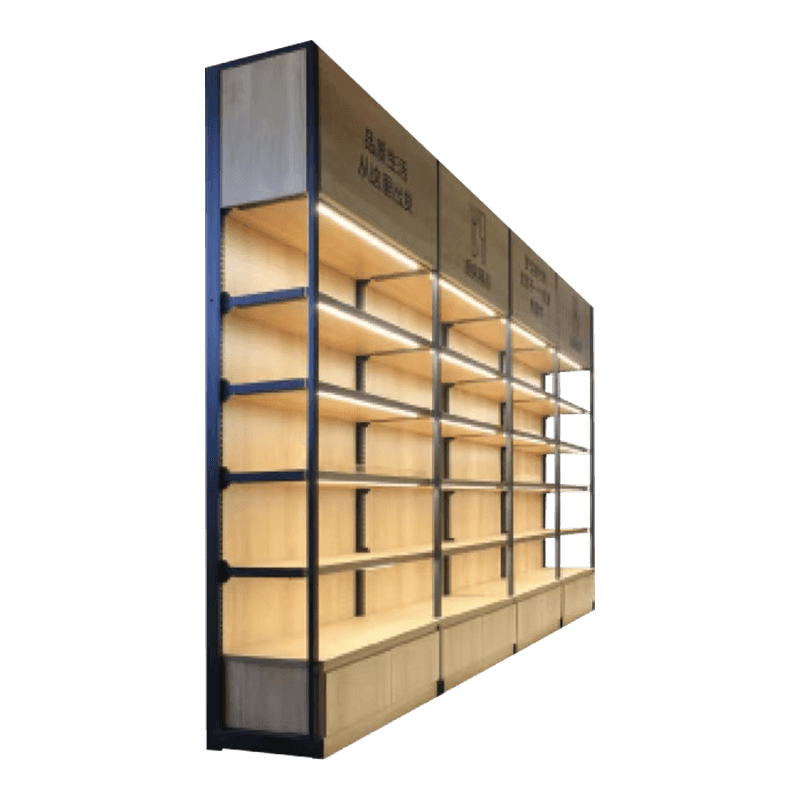
Many commercial display rack models designed for grocery environments include back panels or side barriers. These features serve a dual purpose: they prevent products from falling through the back of the shelf during restocking, and they create a defined visual boundary that helps customers identify where one product category ends and another begins. Some configurations also use back panels to integrate lighting strips, casting a subtle illumination across the shelf face that highlights product labels and makes items easier to spot from the aisle.
Aisle Width and Gondola Configuration
In grocery store layouts, gondola-style shelving units run along the length of aisles. The depth and height of these units directly affect how open or cramped an aisle feels. Shallower shelves (around 30–35 cm) work well for lighter packaged goods and maintain a more open aisle. Deeper shelves (40–50 cm) can hold more volume but require wider aisles to remain comfortable for shoppers pushing carts.
Shopping Mall Applications: Where Aesthetics and Function Must Align
Shopping mall retail environments have different priorities compared to grocery stores. Here, the display rack needs to do more than hold merchandise—it needs to contribute to the overall atmosphere of the store and align with the brand's visual identity. Shoppers in a mall are often in browsing mode, which means a display that catches the eye can translate directly into foot traffic and sales.
For mall environments, a commercial display rack with a clean finish, thoughtful proportions, and optional integrated lighting creates the premium look that encourages shoppers to engage. Light and shadow effects produced by back panels with LED integration draw attention to featured products and give the display a curated, editorial quality. This is particularly effective for cosmetics, electronics accessories, fashion accessories, and lifestyle goods—all common categories in mall retail settings.
The same structural requirements apply—rust-resistant coatings, steel frames, adjustable shelves—but the surface finish and design language need to be refined enough to complement interior design rather than clash with it.
Key Features to Evaluate Before You Buy
Whether you're outfitting a single store or rolling out fixtures across multiple locations, use this checklist to evaluate any commercial display rack before committing to a purchase:
- Frame material: High-strength steel is the industry standard for commercial use. Verify the gauge and load rating per shelf.
- Surface treatment: Confirm rust-resistant and wear-resistant coatings, especially if the fixture will be used in humid or food-adjacent environments.
- Adjustability: Check the number of height positions available and how easily shelves can be repositioned without tools.
- Back panels and side barriers: Determine whether these are included or optional, and whether they support lighting integration.
- Modularity: Can units be connected end-to-end to form continuous runs? This is essential for grocery and supermarket aisle configurations.
- Finish options: Are multiple colors or finishes available to match your store's interior design or brand palette?
- Assembly and maintenance: Simple bolt-together assembly and easy-to-clean surfaces reduce operational burden over time.
Getting the Most Out of Your Display Rack Investment
A well-chosen commercial display rack pays dividends beyond its initial purchase price. By maximizing space utilization, reducing the need for frequent replacements, and contributing to a more organized and appealing shopping environment, quality fixtures deliver measurable returns. Here are a few practices to extend the value of your investment:
- Reconfigure shelf heights seasonally to accommodate promotional products or new inventory sizes without buying new fixtures.
- Use back panels to attach printed signage or digital price tags, reducing the need for separate display accessories.
- Clean coated surfaces regularly with non-abrasive cleaners to preserve the finish and extend the life of the rack.
- Position high-margin or featured products at eye level (approximately 120–150 cm from the floor) to leverage natural browsing behavior.
- For grocery and supermarket layouts, ensure end-of-aisle gondola units are reserved for promotional displays rather than standard inventory.
The right commercial display rack is not a commodity purchase—it's a foundational decision that shapes how your store functions and how customers experience your brand. Prioritizing durability, adjustability, and design compatibility from the start ensures your fixtures serve your business effectively for years to come.