 English
 Español
 русский
 عربى
عربى 中文简体
中文简体
Content
- 1 Why Checkout Display Counters Are a Strategic Retail Asset
- 2 How Convenience Store Checkout Display Counters Are Designed Differently
- 3 Impulse Merchandising at the Counter: What to Display and Where
- 4 Grocery Store Display Cabinets at Checkout: Expanding the Format
- 5 Selecting the Right Checkout Counter Configuration for Your Store
- 6 Installation, Maintenance, and Long-Term Performance
Why Checkout Display Counters Are a Strategic Retail Asset
The checkout zone is the last commercial touchpoint between a retailer and a customer before the transaction is complete. It is also, counterintuitively, one of the highest-converting merchandising locations in any store. Research consistently shows that customers waiting in a checkout queue are in a psychologically receptive state — they have already committed to a purchase, their attention is idle, and they are physically stationary for 30 to 90 seconds. Checkout display counters are purpose-built to capitalize on exactly this window, transforming passive queue time into active selling opportunity without requiring any additional floor space or staff intervention.
For convenience stores and grocery retailers, where average transaction values are relatively low and profit margins are thin, the incremental revenue generated by a well-specified checkout counter can represent a meaningful contribution to overall store profitability. A single additional impulse purchase per transaction — a pack of gum, a lighter, a single-serve snack — adds up to thousands of dollars in annualized revenue across a high-traffic location. This is why the design, configuration, and product placement strategy of checkout display counters deserves the same rigorous commercial attention as any other major store fixture investment.
How Convenience Store Checkout Display Counters Are Designed Differently
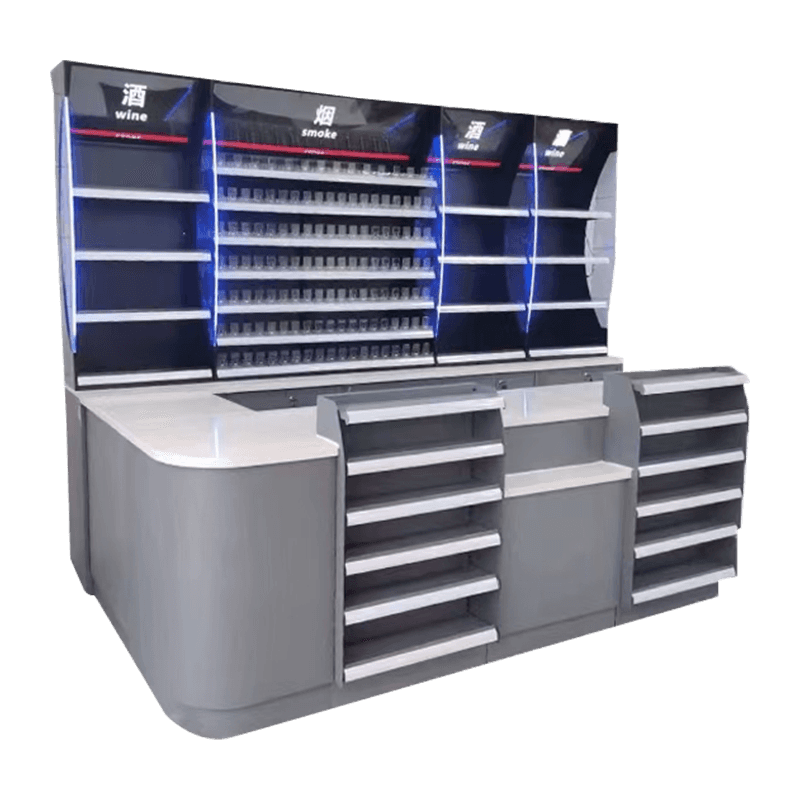
Convenience store checkout display counters operate under a fundamentally different set of constraints than the checkout fixtures found in supermarkets or department stores. Convenience store formats are typically compact — floor areas of 50 to 200 square meters are common — meaning that the checkout counter must deliver maximum commercial functionality from a minimal physical footprint. Every centimeter of counter width, every tier of display shelving, and every storage compartment must earn its place through direct contribution to operational efficiency or sales performance.
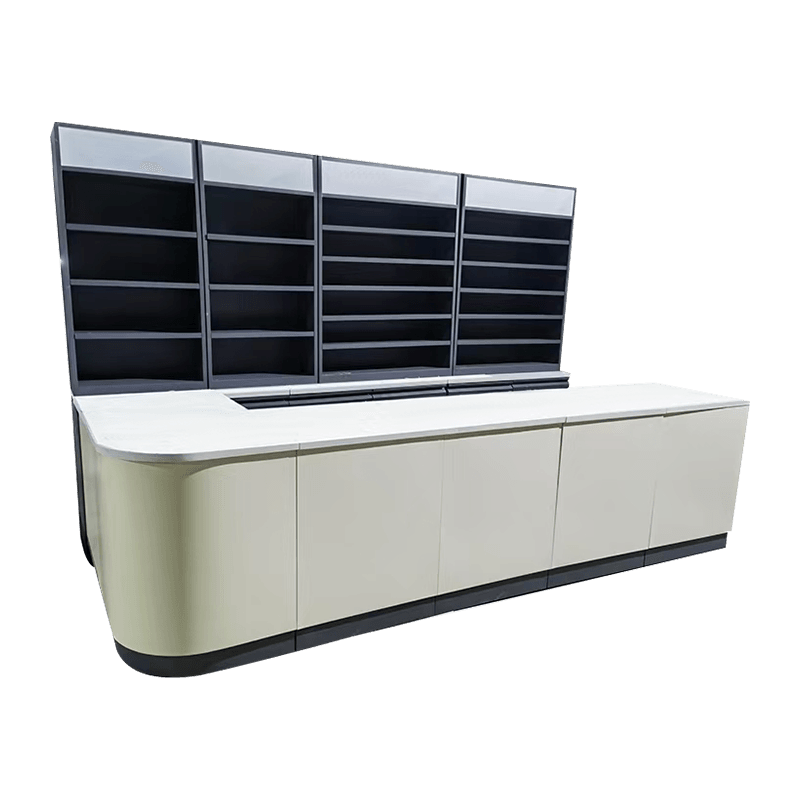
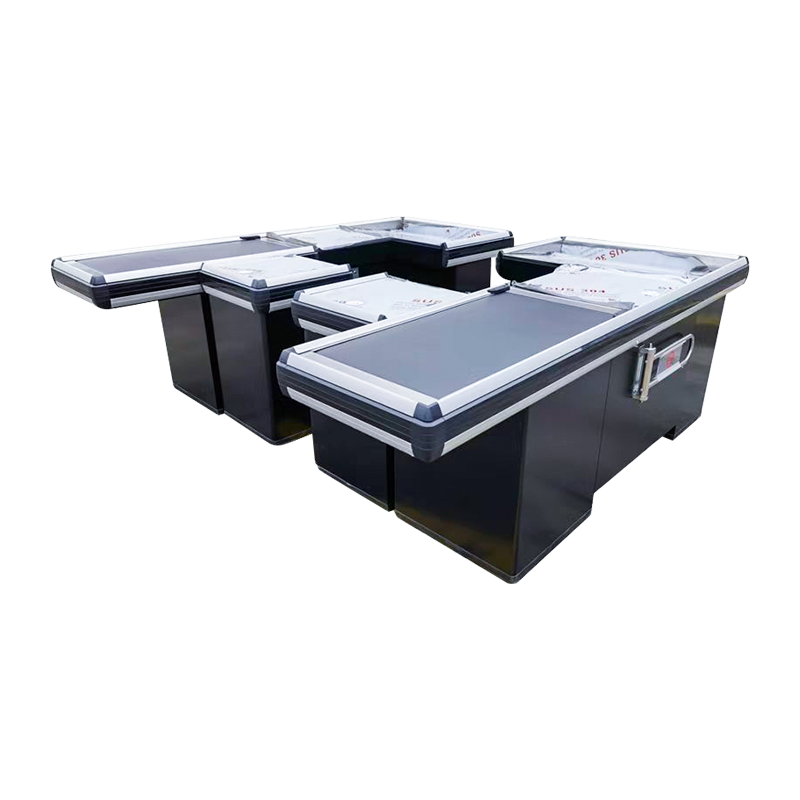
The ergonomic design of these counters reflects the physical reality of convenience store operations. Cashiers in convenience environments frequently work alone and manage simultaneous tasks — processing payments, answering customer questions, monitoring the store floor, and restocking nearby shelves — often without the support staff available in larger retail formats. A well-designed convenience store checkout display counter positions the payment terminal, barcode scanner, receipt printer, and cash drawer within a natural arm's reach arc, minimizing the physical movement required for each transaction and reducing operator fatigue during long shifts. The countertop surface itself is specified for smooth, unobstructed item scanning — a flat, easy-clean material that allows products to slide freely from customer to cashier without snagging or creating bottlenecks during peak traffic periods.
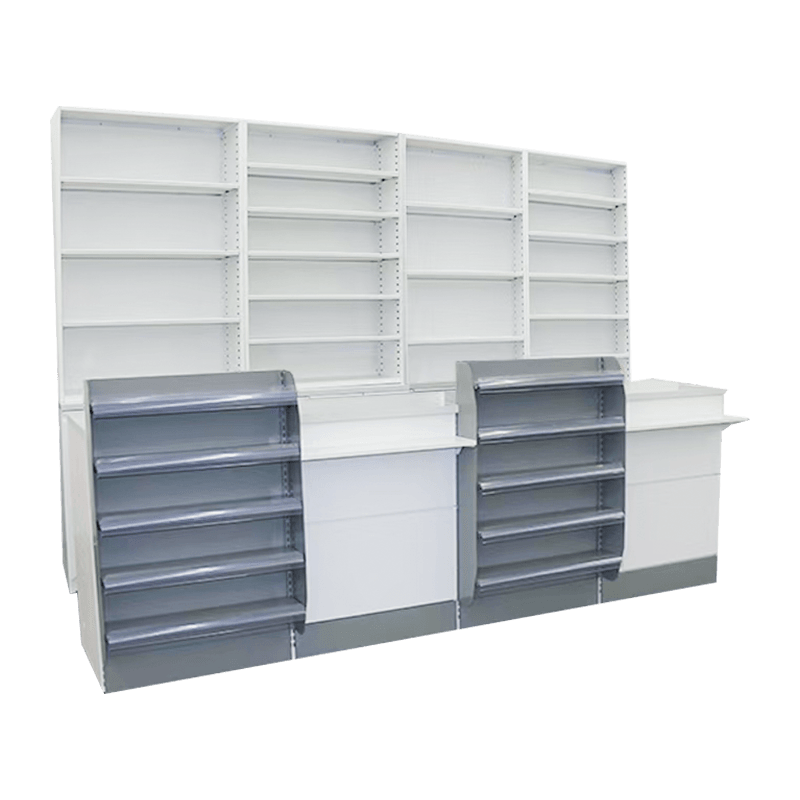
The front-facing display tiers integrated into convenience store checkout display counters are typically configured at a height of 900 to 1,100 mm from the floor — precisely within the eye-level sightline of an adult customer standing at the counter. This positioning is not accidental; it reflects decades of retail psychology research demonstrating that products displayed at eye level generate significantly higher conversion rates than the same products placed at floor or overhead height. Multi-tier shelving on the counter face allows store owners to present three to five product rows simultaneously, each dedicated to a different impulse category.
Impulse Merchandising at the Counter: What to Display and Where
The product selection strategy for checkout display counters is as important as the physical design of the fixture itself. Not every product category performs equally well at the point of sale. The most effective impulse items share a common profile: they are low in unit price (typically under five dollars), require no considered decision-making, satisfy an immediate sensory or practical need, and are small enough to be added to a transaction without requiring a separate bag or creating handling complications at the register.
The following product categories consistently outperform at convenience store checkout zones:
- Confectionery and mints: Chewing gum, breath mints, and individually wrapped candies are the archetypal checkout impulse category. Their small pack format allows dense display on limited shelf space, and their near-universal appeal means conversion rates remain high across diverse customer demographics.
- Lighters and matches: High-frequency repurchase items with strong impulse characteristics — customers often remember they need a lighter only when they see one displayed at eye level.
- Single-serve snacks: Nuts, chips, and energy bars in single-portion packaging perform well for customers who have not made a dedicated snack purchase during their main shop.
- Seasonal and promotional items: Limited-time products, new arrivals, and special offer packs generate curiosity and urgency — two powerful purchase triggers in a checkout queue context where the customer has a few seconds of idle attention.
- Practical convenience items: Phone charging cables, earbuds, pain relievers, and travel-size personal care products serve customers with immediate unplanned needs — a category that consistently delivers high transaction attachment rates in urban convenience locations.
Rotating the product assortment on checkout display counters seasonally and in response to sales data is essential to maintaining customer engagement and preventing the visual fatigue that sets in when the same products occupy the same positions for extended periods. Many convenience store operators review checkout counter performance monthly, replacing underperforming SKUs with higher-velocity alternatives and testing new product introductions in the high-visibility front-tier positions before committing to broader in-store placement.
Grocery Store Display Cabinets at Checkout: Expanding the Format
While convenience store checkout display counters prioritize compactness and multi-functionality, grocery store display cabinets at the checkout zone operate at a larger scale and serve a broader merchandising function. Grocery checkout environments typically accommodate longer customer dwell times, wider aisle approaches, and more complex transaction processes — all of which create extended merchandising opportunities that justify larger, more elaborate display cabinet configurations.
Grocery store display cabinets at checkout are commonly configured as a system rather than a single unit, with the primary checkout counter flanked by freestanding or counter-mounted display modules on both the customer-facing and cashier-facing sides. This system approach allows the retailer to create a complete checkout experience zone — a defined physical space that guides customer movement, presents a curated product selection at multiple price points, and reinforces the store's promotional messaging at the highest-traffic point in the building.
Refrigerated Display Integration
Many modern grocery store display cabinets incorporate refrigerated sections at or adjacent to the checkout counter, specifically targeting cold beverage and chilled snack impulse sales. A customer completing a grocery shop who did not pick up a drink in the beverage aisle frequently makes a spontaneous cold drink purchase at the checkout — particularly during warm weather or when the refrigerated display is positioned to intercept the natural line-of-sight as they approach the register. Integrating a compact refrigerated cabinet into the checkout display system captures this high-value impulse category without requiring the customer to return to the main store floor.
Built-In Storage and Operational Organization
Both convenience store checkout display counters and grocery store display cabinets benefit significantly from integrated storage solutions built into the counter body. Below-counter cabinets with lockable doors provide secure storage for cash float, staff belongings, and operational consumables such as receipt rolls, bags, and cleaning supplies. Pull-out drawers or open shelving above the cashier knee line can store backup stock of the fastest-moving checkout impulse items — ensuring that the customer-facing display tiers are never left empty during busy trading periods without requiring a staff member to make a back-of-store stock run during peak hours.
Selecting the Right Checkout Counter Configuration for Your Store
Choosing between available checkout display counter configurations requires a systematic evaluation of store-specific operational and commercial requirements. The following comparison covers the key decision variables for convenience and grocery retail environments:
| Feature | Convenience Store Counter | Grocery Store Display Cabinet |
| Footprint | Compact (0.9–1.5 m width) | Larger (1.5–3.0 m system width) |
| Display tiers | 3–5 front-facing tiers | Multi-module with side wings |
| Storage | Under-counter lockable cabinet | Integrated drawers + cabinet bays |
| Refrigeration option | Optional add-on unit | Often integrated or adjacent |
| POS equipment space | Single terminal, compact layout | Dual terminal, wider belt zone |
| Best suited for | High-traffic, space-limited formats | Mid to large grocery formats |
Installation, Maintenance, and Long-Term Performance
The operational durability of checkout display counters is a critical procurement consideration, given the intense daily use these fixtures endure. A busy convenience store checkout counter may process 500 to 1,000 transactions per day, with each transaction involving repeated placement and removal of products on the countertop surface, multiple cashier interactions with the display shelving, and continuous customer contact with the front-facing panels. Countertop materials should be specified for scratch resistance, chemical resistance to cleaning agents, and ease of sanitization — high-pressure laminate, stainless steel, and tempered glass are the most commonly specified surfaces for high-traffic checkout environments.
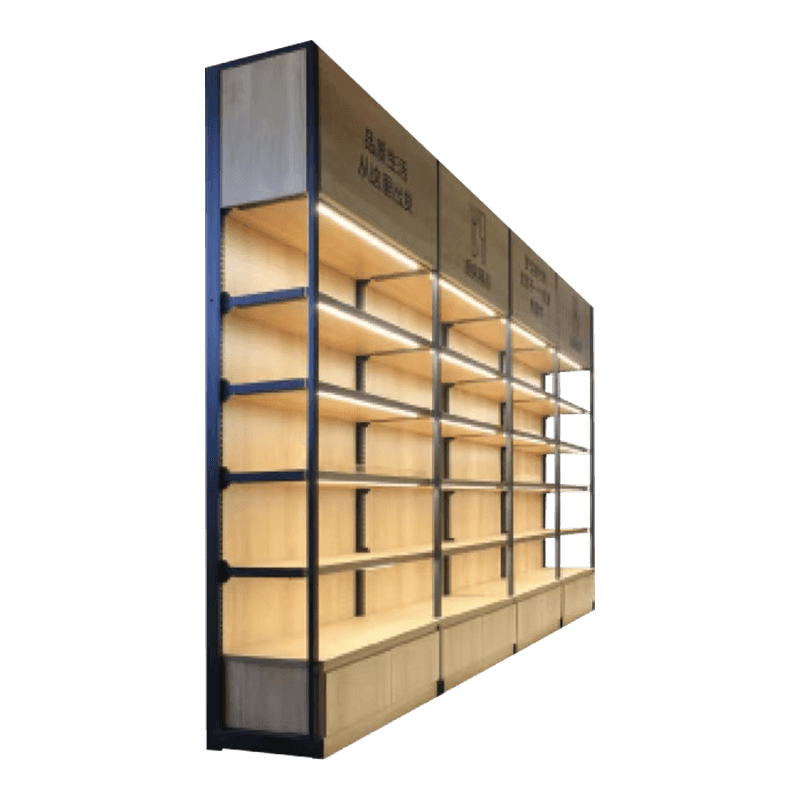
Display shelf adjustability is a feature that delivers ongoing commercial value long after installation. Fixed-shelf configurations lock the retailer into a product range that matches the original shelf spacing — a significant limitation when seasonal product changes, new supplier ranges, or evolving impulse categories require different pack heights. Adjustable-pitch shelving systems that allow shelf repositioning in 25 or 50 mm increments give store operators the flexibility to optimize the display configuration for maximum revenue across changing product assortments without investing in new fixtures.
Investing in high-quality checkout display counters — whether for a single convenience store location or a multi-site grocery retail network — is one of the most commercially efficient capital expenditure decisions available to a retail operator. The fixture sits at the intersection of operational efficiency and sales performance, improving both simultaneously from a footprint that costs nothing in additional floor area. Specified correctly and merchandised strategically, a well-designed checkout counter pays back its purchase cost within months through incremental impulse sales alone.