 English
 Español
 русский
 عربى
عربى 中文简体
中文简体
Content
- 1 What Is a Commercial Display Rack and Why Does It Matter
- 2 Types of Racking Systems for Commercial Retail Environments
- 3
- 4 Slat Wall Displays: The Most Versatile Wall Merchandising Solution
- 5 Display Rack Standards in Big Box Stores
- 6 How to Choose the Right Commercial Display Rack for Your Business
- 7 Key Trends Shaping Commercial Display Rack Design in 2025
What Is a Commercial Display Rack and Why Does It Matter
A commercial display rack is a purpose-built retail fixture designed to organize, present, and maximize the visibility of merchandise on a sales floor. Unlike standard shelving, commercial display racks are engineered for high-turnover environments where product density, accessibility, and visual appeal directly influence purchasing decisions. Retailers who invest in well-designed display solutions consistently report measurable improvements in sales-per-square-foot — a critical KPI in any brick-and-mortar operation.
The global retail display market was valued at over $14 billion in 2023 and continues to grow as brands compete for shelf space and shopper attention. Choosing the right commercial display rack is not merely an aesthetic decision — it shapes the entire customer journey from entry to checkout.
Types of Racking Systems for Commercial Retail Environments
A racking system in a commercial context encompasses far more than warehouse pallet racks. In retail, racking systems are modular frameworks that support product display across a wide range of categories — from apparel and electronics to hardware and food. The most common types include:
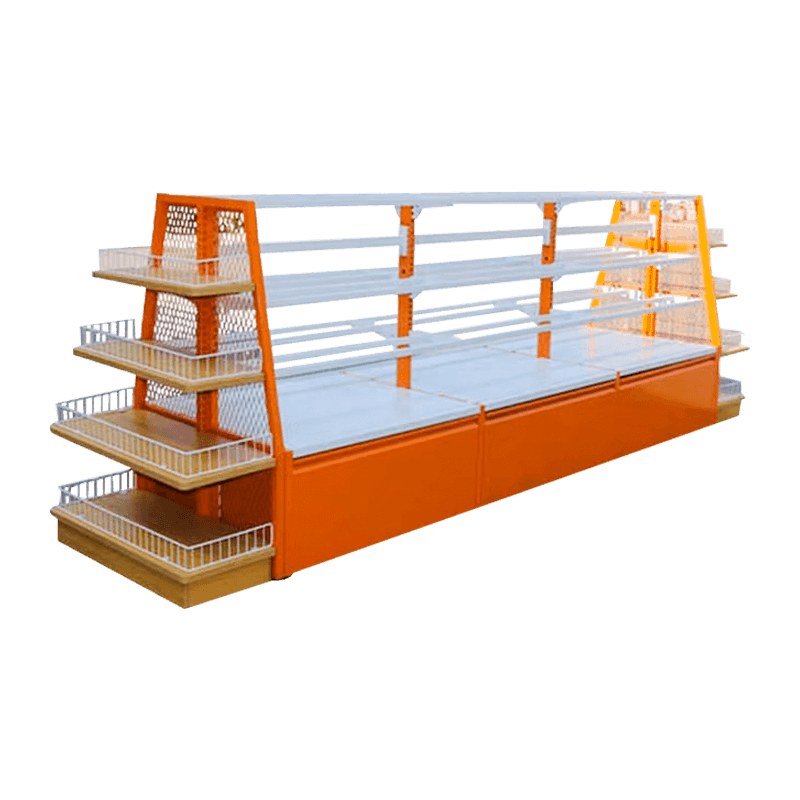
- Gondola racking — freestanding double-sided shelving units used in grocery stores, pharmacies, and general merchandise retail.
- Wall-mounted racking — fixed to perimeter walls to maximize floor space, often used in boutique retail and specialty shops.
- Gridwall and pegboard racking — lightweight, economical systems suitable for accessories and smaller SKUs.
- Slatwall racking — a highly versatile, panel-based system that accepts a broad range of accessories and hooks.
- Heavy-duty steel racking — for tools, large appliances, or industrial products that require load-bearing capacity.
Selecting the right racking system depends on three core variables: product weight and size, store layout, and merchandising flexibility requirements. A system that works for a hardware aisle will not necessarily perform in a fashion boutique.
| Racking Type | Best For | Typical Load Capacity | Flexibility |
|---|---|---|---|
| Gondola | Grocery, Pharmacy | 200–400 lbs/shelf | Medium |
| Slatwall | Apparel, Accessories | 50–150 lbs/panel | High |
| Heavy-Duty Steel | Hardware, Appliances | 1,000+ lbs/shelf | Low |
| Gridwall | Accessories, Small Items | 30–80 lbs/panel | High |
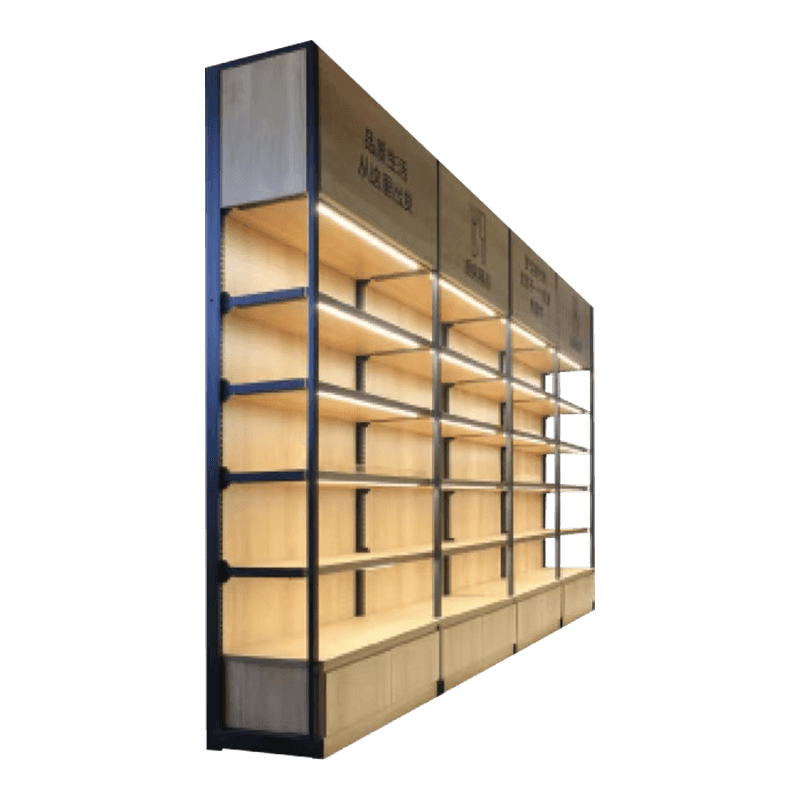
Slat Wall Displays: The Most Versatile Wall Merchandising Solution
Among all wall-mounted retail fixtures, slat wall (also written as slatwall) stands out as the most adaptable system available. Constructed from MDF or PVC panels featuring horizontal grooves spaced approximately 3 inches apart, slat wall panels accept a virtually unlimited range of compatible accessories — including hooks, shelves, baskets, hangrails, and face-out arms — without requiring any drilling or permanent modification.
This plug-and-play flexibility makes slat wall a preferred choice for retailers who change their floor sets frequently or carry a rotating product mix. Key advantages include:
- Rapid reconfiguration — accessories slide in and out of grooves without tools, enabling seasonal refreshes in hours rather than days.
- High display density — perimeter walls become fully productive retail space from floor to ceiling.
- Clean visual presentation — the uniform panel surface creates a consistent, professional backdrop for merchandise.
- Material variety — available in melamine, PVC-laminated, and aluminum-insert versions to suit different aesthetics and durability requirements.
Slat wall is widely used in apparel boutiques, shoe stores, sporting goods shops, and electronics retailers. It is equally common as an end-cap or freestanding tower display in larger-format stores, where it anchors promotional zones and impulse-purchase areas.
Display Rack Standards in Big Box Stores
Big box stores — large-format mass retailers such as home improvement chains, warehouse clubs, and hypermarkets — operate under strict fixture specifications that differ significantly from specialty retail. These retailers prioritize three things above all else: throughput efficiency, structural durability, and planogram compliance.
Display racks destined for big box environments must meet demanding performance criteria:
- Vendor-specific planograms — product placement is dictated by category managers, and fixtures must conform precisely to assigned footprint dimensions (typically measured in linear feet).
- Certifications and safety standards — racks must comply with ANSI/RMI standards in North America, covering load ratings, stability, and seismic performance in applicable regions.
- Forklift and pallet jack compatibility — in warehouse-style big box environments, stock replenishment is handled by powered equipment, requiring rack bases and clear aisle widths to accommodate these operations.
- Brand consistency across locations — chains with hundreds of stores require fixtures that can be manufactured at scale with identical specifications and finishes.
Brands seeking shelf space in big box stores are often required to supply their own vendor-managed display racks — custom-built fixtures that fit seamlessly within the retailer's existing gondola grid while differentiating the brand's product section. This is a significant investment, but one that consistently drives higher sell-through rates compared to standard shelf placement.
How to Choose the Right Commercial Display Rack for Your Business
Choosing a commercial display rack is a strategic decision that affects store layout, staffing efficiency, and ultimately, revenue per square foot. The following framework helps retailers and brand managers make the right choice:
1. Define Your Product Profile
Assess the weight, size, and packaging format of your products. Bulky items in cardboard boxes require gondola shelving or heavy-duty steel racks, while packaged accessories or blister-card products perform best on slat wall hooks or pegboard systems.
2. Evaluate Your Store Environment
Consider ceiling height, floor area, traffic flow patterns, and whether your displays will be perimeter-mounted or freestanding. High-traffic areas near entrances benefit from sturdy, self-contained display racks that can withstand frequent customer interaction.
3. Prioritize Merchandising Flexibility
If your product assortment changes seasonally or you run frequent promotions, a modular racking system — such as slatwall or adjustable gondola shelving — will deliver better long-term ROI than fixed, category-specific fixtures.
4. Factor In Retail Channel Requirements
If you sell through big box stores, work closely with the retailer's category team before commissioning custom display racks. Fixture footprint, height restrictions, and labeling requirements are typically non-negotiable and must be incorporated into the design from the outset.
5. Consider Total Cost of Ownership
The purchase price of a racking system is only part of the equation. Factor in installation labor, freight, ongoing maintenance, and the cost of reconfiguring or replacing fixtures as your product mix evolves. Durable, modular systems frequently deliver a lower total cost over a 5–10 year horizon compared to cheaper, single-purpose alternatives.
Key Trends Shaping Commercial Display Rack Design in 2025
The retail fixtures industry is evolving rapidly in response to shifting consumer behaviors, sustainability pressures, and the rise of omnichannel retail. Several trends are redefining what buyers expect from commercial display racks:
- Sustainable materials — retailers and brands are prioritizing fixtures made from recycled steel, FSC-certified wood, and recyclable plastics to meet ESG commitments.
- Integrated digital signage — high-traffic display racks are increasingly equipped with LED screens or e-ink price tags, merging physical and digital merchandising in a single fixture.
- Modular, flat-pack designs — driven by global supply chain complexity, more manufacturers now offer racking systems that ship flat and assemble without specialist tools, reducing freight costs and lead times.
- Omnichannel-ready fixtures — in stores that double as fulfillment hubs, racking systems must support both customer-facing display and efficient pick-and-pack workflows simultaneously.
As retail continues to evolve, the commercial display rack remains one of the highest-leverage investments a brand or retailer can make — translating directly into shopper engagement, product discoverability, and sales performance.