 English
 Español
 русский
 عربى
عربى 中文简体
中文简体
Content
- 1 Why Store Layout Defines the Fresh Produce Shopping Experience
- 2 Understanding the Different Types of Fruit and Vegetable Racks
- 3 Strategic Placement of Fruit and Vegetable Racks to Drive Sales
- 4 Matching Rack Materials to Your Store Environment
- 5 Reducing Waste Through Better Rack Design and Stock Rotation
- 6 Visual Merchandising Techniques to Maximise Rack Impact
- 7 Planning a Rack Investment That Grows With Your Business
Why Store Layout Defines the Fresh Produce Shopping Experience
Walk into any high-performing grocery store or market and one thing becomes immediately clear: the produce section is not an afterthought. It is a carefully engineered environment where every shelf angle, every basket position, and every aisle width has been considered with the customer's journey in mind. Fruit and vegetable racks sit at the heart of this environment, acting as the structural backbone that determines how products are presented, how shoppers navigate, and ultimately how much they spend. Getting this right is not about aesthetics alone — it directly affects spoilage rates, restocking efficiency, and your store's bottom line. Whether you operate a compact convenience store, a farm shop, or a large supermarket, rethinking your fruit and vegetable racks strategy is one of the highest-return investments a retailer can make.
Understanding the Different Types of Fruit and Vegetable Racks
Before redesigning your layout, it is essential to understand the range of fruit and vegetable racks available and what each type is best suited for. Choosing the wrong format for your space or product mix creates operational headaches and leaves sales potential unrealised.
Tiered Display Racks
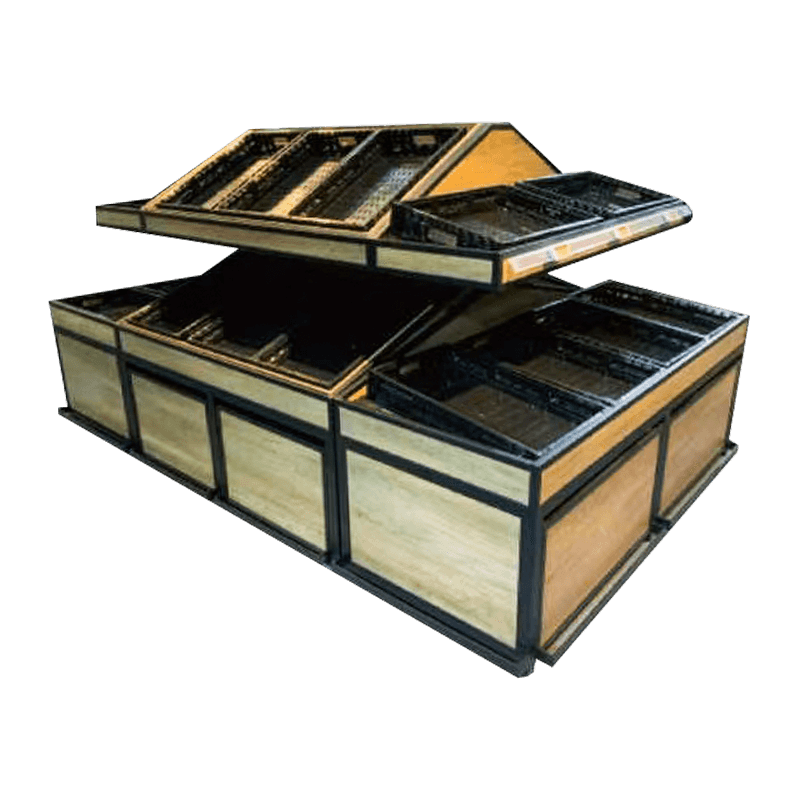
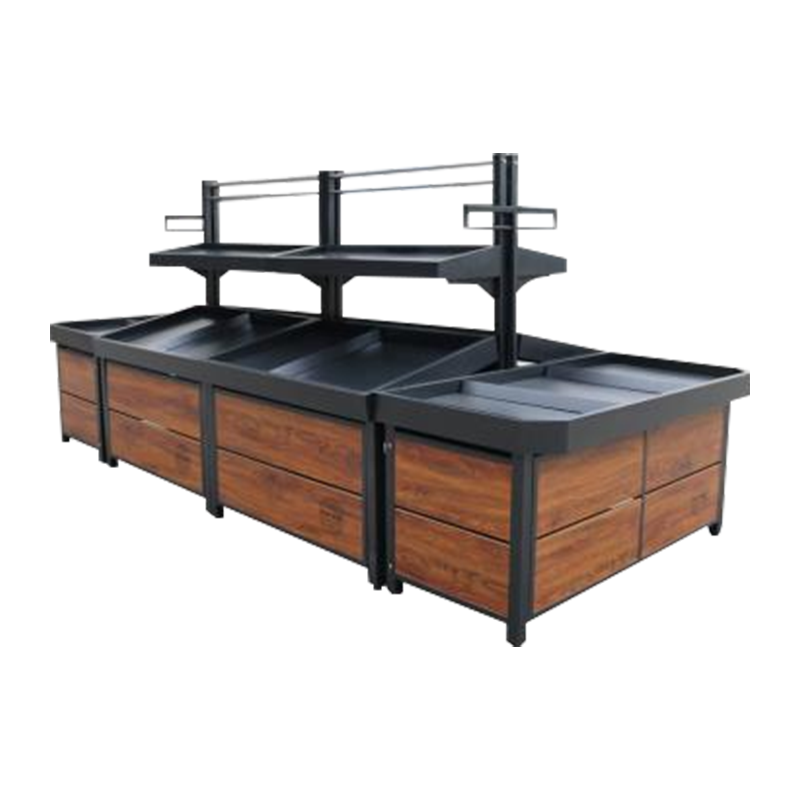
Tiered fruit and vegetable racks feature stepped or angled shelves that elevate products at the back and lower them toward the customer at the front. This design maximises product visibility, allowing shoppers to see the full depth of the display at a glance. Tiered racks work particularly well for items sold loose by weight — potatoes, onions, apples, oranges — where volume display creates an impression of freshness and abundance. The cascading effect is visually appealing and encourages customers to reach in and engage with the product.
Modular Gondola-Style Racks
Modular gondola-style fruit and vegetable racks are freestanding units that can be configured in straight runs, L-shapes, or islands depending on your floor plan. Their versatility makes them ideal for stores that periodically reorganise their layout or that need to adapt the produce section to seasonal inventory changes. Most modular systems allow shelf heights to be adjusted without tools, making it easy to accommodate tall items such as celery bunches, leeks, or pineapples alongside low-profile items like mushrooms and berries.
Wall-Mounted and Perimeter Racks
Wall-mounted fruit and vegetable racks maximise floor space by pushing display capacity to the store perimeter. This is particularly valuable in smaller retail environments where every square metre of floor space must work hard. Perimeter displays also create a natural flow that guides customers around the edge of the store before drawing them into central aisles — a well-established retail design principle that increases dwell time and exposure to more product categories.
Rotating and Mobile Racks
Rotating display stands and mobile fruit and vegetable racks on castors offer flexibility for stores with irregular floor plans or those that host markets, events, or seasonal promotions. Mobile units can be repositioned quickly, allowing you to create temporary feature displays near entrances during peak trading periods and then return the space to its standard configuration when traffic subsides.
Strategic Placement of Fruit and Vegetable Racks to Drive Sales
The position of your fruit and vegetable racks within the store has a measurable impact on sales performance. Research consistently shows that placing fresh produce near the store entrance creates a positive first impression, signals quality and freshness to shoppers before they encounter any other category, and puts customers in a purchasing mindset from the moment they enter. Many retailers report that customers who pick up fruit or vegetables early in their shopping trip go on to spend more overall, as the healthy choice seems to give them psychological permission to add other items to their basket.
Beyond the entrance, consider the following placement principles when positioning your fruit and vegetable racks throughout the store:
- Eye-level positioning for high-margin items: Place premium pre-packed salads, exotic fruits, and prepared vegetable mixes at eye level on your racks. Bulk commodity items like carrots and potatoes can occupy lower shelves where customers expect to find heavier, value-driven products.
- Cross-merchandising opportunities: Position fruit and vegetable racks adjacent to complementary categories. Salad leaves near salad dressings, citrus fruits near juicers, and stir-fry vegetables near cooking sauces all encourage multi-item purchases and increase basket value.
- Feature end caps for promotions: The end positions of your fruit and vegetable rack runs are prime real estate. Use these for seasonal specials, multibuys, or locally sourced items that deserve extra visibility and storytelling.
- Impulse positions near checkout: Small rotating or tiered racks near the checkout loaded with bananas, snack packs of grapes, or single-serve fruits capture last-minute impulse purchases from customers who did not plan to buy fresh produce on that visit.
Matching Rack Materials to Your Store Environment
The material construction of your fruit and vegetable racks should reflect both the aesthetic ambition of your store and the practical demands of a high-moisture, high-traffic retail environment. Each material has distinct advantages and trade-offs that affect durability, maintenance, and brand perception.
| Material | Best For | Key Advantage | Consideration |
| Powder-coated steel | Supermarkets, large stores | High strength, long lifespan | Heavier, less flexible |
| Stainless steel | Wet markets, delis | Fully corrosion-resistant | Higher upfront cost |
| Natural wood | Farm shops, artisan retailers | Warm, premium aesthetic | Requires sealing, more maintenance |
| Wire mesh | Convenience stores, markets | Lightweight, good airflow | Less suited for heavy loads |
| Plastic/acrylic | Compact displays, impulse units | Easy to clean, colourful | Lower weight capacity |
For most general grocery retailers, powder-coated steel fruit and vegetable racks offer the best combination of durability, load capacity, and value for money. Farm shops and independent food retailers increasingly favour natural wood or mixed-material racks that reinforce their local and artisan brand positioning. Whatever material you choose, ensure all surfaces are food-safe, easy to wipe down, and resistant to the moisture and organic residue that inevitably accumulate in any produce display environment.
Reducing Waste Through Better Rack Design and Stock Rotation
One of the most overlooked benefits of well-designed fruit and vegetable racks is their role in reducing fresh produce waste. Poor display design — particularly flat, deep shelving where stock is piled high — conceals older items beneath newer deliveries, accelerating spoilage and generating significant waste costs. Angled gravity-feed racks or tiered designs with front-loading access naturally enforce a first-in, first-out stock rotation because older stock sits at the front and is purchased before newer deliveries stacked at the back.
Airflow is another critical factor. Wire-mesh or slatted shelf surfaces on fruit and vegetable racks allow air to circulate around produce, slowing the ripening process and extending shelf life. Solid-based shelves trap moisture and ethylene gas — the natural ripening agent emitted by many fruits — creating micro-environments that cause adjacent products to over-ripen rapidly. When specifying new fruit and vegetable racks, always prioritise shelf designs that promote airflow, particularly for ethylene-sensitive products such as leafy greens, broccoli, and berries.
Visual Merchandising Techniques to Maximise Rack Impact
Even the best fruit and vegetable racks deliver underwhelming results if the visual merchandising on them is poorly executed. The physical structure is only part of the equation — how you dress and maintain the display determines the impression customers form about the quality and value of your produce.
- Use colour blocking: Arrange products on your racks so that bold colour contrasts — red tomatoes next to green courgettes, yellow peppers beside purple aubergines — create a visually striking display that draws the eye from a distance.
- Keep racks consistently full: Sparse racks signal poor quality or limited choice. Train staff to top up fruit and vegetable racks frequently throughout the day, consolidating stock to maintain a full, abundant appearance even as product sells through.
- Use clear, hand-written-style signage: Blackboard or chalk-effect price signs on fruit and vegetable racks reinforce a market-fresh aesthetic and give retailers flexibility to update pricing and origin information quickly.
- Highlight provenance: Customers increasingly want to know where their food comes from. Use rack signage to call out local farms, seasonal sourcing, and organic certifications — this information actively influences purchasing decisions and supports premium pricing.
Planning a Rack Investment That Grows With Your Business
Investing in new fruit and vegetable racks is a medium-to-long-term decision that should account for your store's current needs and future growth trajectory. Modular systems that can be expanded, reconfigured, or supplemented with additional units as your range grows offer the best long-term value. Before purchasing, measure your available floor and wall space carefully, map out the customer flow you want to create, and calculate the product volume you need to display at peak stocking levels. Talk to suppliers about weight-bearing ratings — overloading racks not designed for heavy root vegetables is a common cause of premature structural failure. With the right fruit and vegetable racks in place, properly positioned and impeccably maintained, your store layout becomes a genuine competitive advantage that keeps customers returning to a fresh, well-presented produce section that they trust.