 English
 Español
 русский
 عربى
عربى 中文简体
中文简体
Content
- 1 Why the Right Vegetable Shop Racks Define Your Produce Section
- 2 Structural Design That Works for Every Type of Produce
- 3 Freshness Preservation: The Hidden Value of Advanced Rack Systems
- 4 Visual Merchandising and Display Design That Drives Purchase Intent
- 5 Comparing Rack Types for Different Retail Environments
- 6 Durability and Build Quality for High-Intensity Retail Operations
- 7 Making the Right Investment in Your Produce Section
Why the Right Vegetable Shop Racks Define Your Produce Section
In any supermarket or grocery retail environment, the produce section sets the tone for the entire shopping experience. Customers make immediate judgments about a store's quality and freshness standards within seconds of entering — and the display infrastructure plays a decisive role in shaping that perception. Vegetable shop racks are not simply shelving units; they are strategic retail tools that influence purchasing behavior, preserve product integrity, and determine how efficiently a store can operate its fresh produce department. Choosing the wrong rack means lost sales, increased waste, and a produce section that fails to compete. Choosing the right fruit and vegetable rack for shop environments means building a section that attracts customers, retains freshness, and delivers measurable returns on floor space.
This article breaks down exactly what separates high-performing vegetable shop racks from generic shelving options, covering structural design, freshness features, visual merchandising impact, and durability — giving retailers the practical guidance they need to make informed investment decisions.
Structural Design That Works for Every Type of Produce
One of the most critical — and often overlooked — aspects of a fruit and vegetable rack for shop use is how well its structure accommodates the enormous physical variety of fresh produce. Unlike packaged goods, which tend to share uniform dimensions, fresh produce ranges from large, round watermelons to slender bunches of asparagus, compact punnets of strawberries, and loosely clustered grapes. A rack designed without this diversity in mind will create display inefficiencies, product damage, and customer frustration.
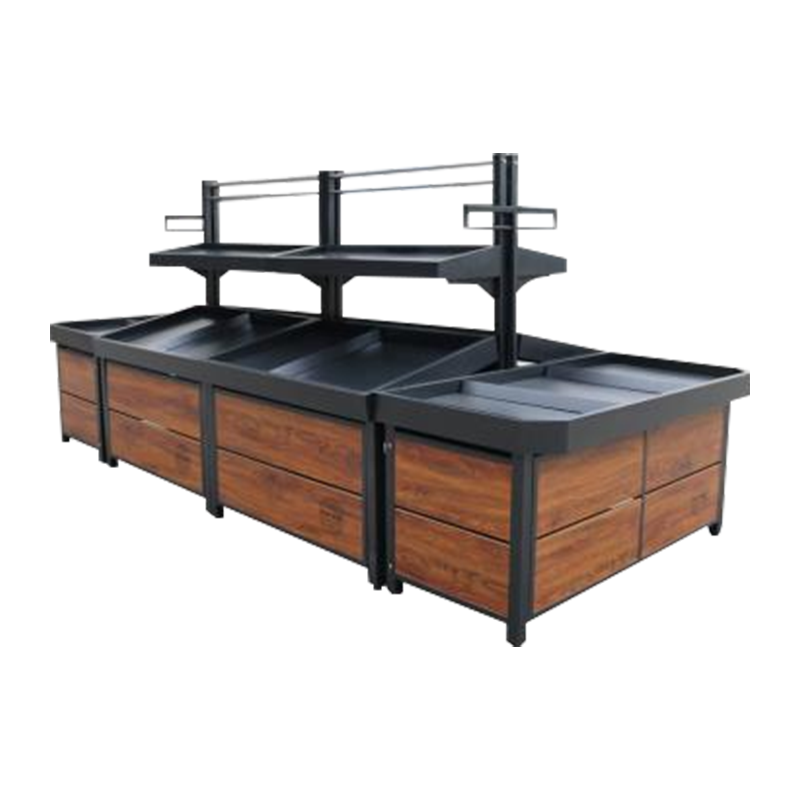
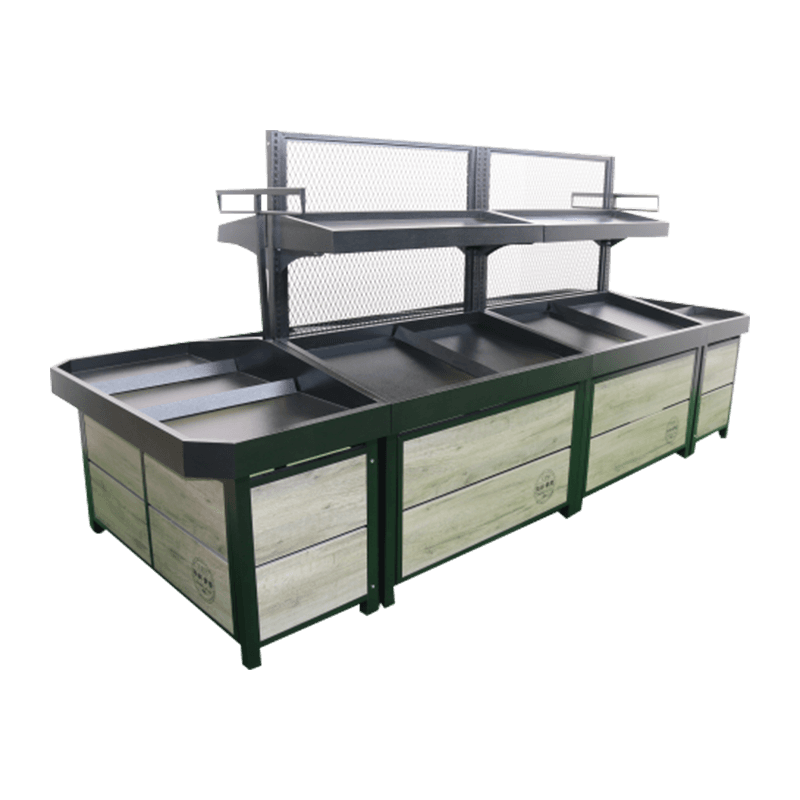
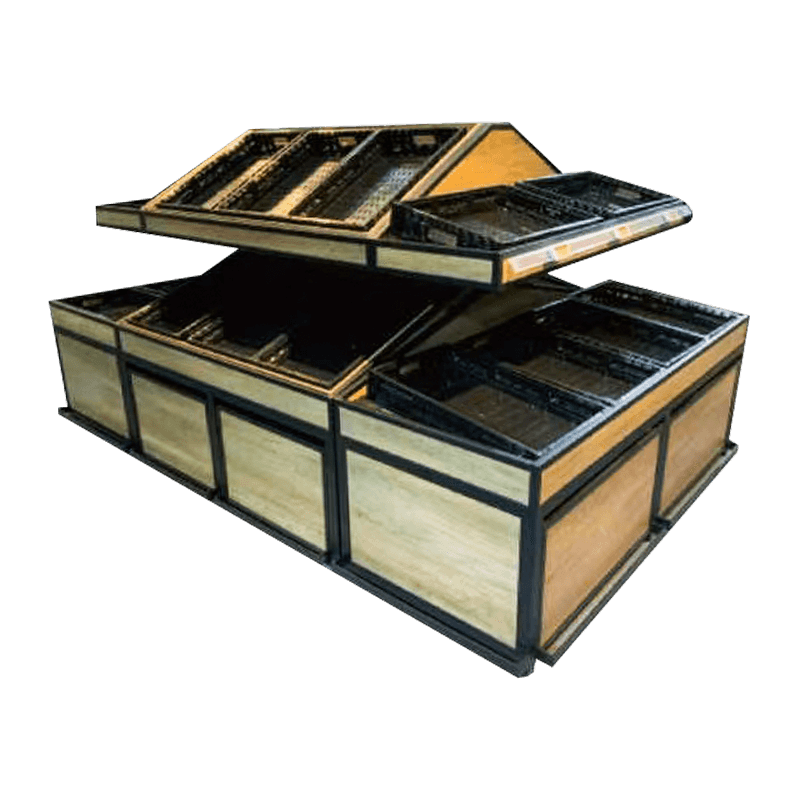
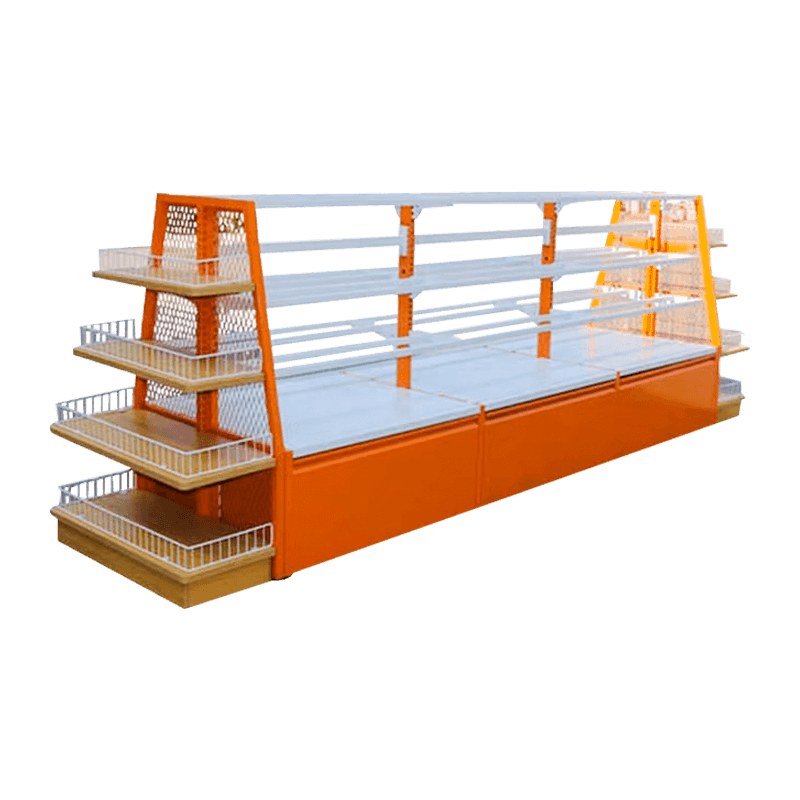
High-quality vegetable shop racks address this challenge through multi-level partition systems and flexible layout configurations. Individual tiers can be repositioned or removed entirely, allowing store managers to reconfigure the display based on seasonal availability, stock volume, or promotional priorities. Staggered multi-layer designs take full advantage of vertical retail space — a significant advantage in stores where floor area is limited. Rather than spreading produce horizontally across wide, low tables, vertical vegetable shop racks can display a far greater variety of items within the same footprint, freeing up floor space for customer flow and complementary product categories.
The practical benefits of a well-engineered structural design include:
- Tiered shelves that can be adjusted in height to accommodate both bulky items like pumpkins and delicate produce like fresh herbs
- Sloped display surfaces that naturally angle produce toward the customer, reducing the need for constant staff repositioning
- Modular configurations that allow individual rack units to be joined, separated, or rearranged during store resets or seasonal campaigns
- Integrated dividers that keep different produce types separated, preventing cross-contamination and maintaining a tidy, organized appearance
Freshness Preservation: The Hidden Value of Advanced Rack Systems
A fruit and vegetable rack for shop settings must do more than display — it must actively contribute to maintaining the freshness of the produce it holds. Freshness is the single most important purchase driver for fruit and vegetable shoppers. Studies consistently show that customers will bypass a cheaper option in favor of a fresher-looking product, which means a rack's ability to extend shelf life has a direct and measurable impact on revenue.
Built-in ventilation systems are a defining feature of premium vegetable shop racks. By continuously circulating fresh air through and around the produce, these systems reduce the buildup of humidity that accelerates decay, mold formation, and wilting. The airflow is calibrated to be gentle enough not to dry out leafy vegetables or delicate soft fruits, yet effective enough to keep the microclimate around the produce consistently cool and fresh. For high-end retail environments, some rack systems incorporate precise temperature control modules, allowing store operators to set different climate zones within a single display unit — tropical fruits on one section, cool-temperature leafy greens on another.
The operational advantages of freshness-preserving vegetable shop racks are significant:
- Reduced shrinkage and produce waste, directly lowering cost of goods sold
- Extended display windows that reduce the frequency of restocking cycles
- Improved customer satisfaction scores, as shoppers consistently find produce that meets or exceeds freshness expectations
- Reduced staff time spent removing and replacing spoiled stock throughout the trading day
Visual Merchandising and Display Design That Drives Purchase Intent
The visual impact of a fruit and vegetable rack for shop environments is as important as its structural and freshness performance. Retail research repeatedly demonstrates that produce displayed under well-designed lighting, in an organized and visually inviting format, achieves significantly higher conversion rates than produce presented under flat, uniform overhead lighting on plain metal shelving. The difference is not subtle — stores that invest in purpose-built vegetable shop racks with integrated display lighting routinely report measurable lifts in fresh produce category sales.
The most effective rack designs use soft, warm LED lighting positioned to illuminate produce from multiple angles. This lighting approach enhances the natural colors of fruits and vegetables — deepening the red of tomatoes, brightening the orange of citrus, and making the green of leafy vegetables look vivid and alive. When produce carries surface moisture — from misting systems or recent washing — this multi-angle lighting causes water droplets to glisten, creating a visual cue of freshness that is almost impossible for customers to resist.
Beyond lighting, the material and color palette of the rack itself contributes to the overall atmosphere. Vegetable shop racks that combine natural wood finishes with clean metal frames create an environment that feels fresh, organic, and premium. This kind of close-to-nature aesthetic aligns with modern consumer preferences for wholesome, minimally processed food — positioning even a conventional supermarket's produce section as a destination worth visiting.
Comparing Rack Types for Different Retail Environments
Not every store needs the same type of fruit and vegetable rack. The ideal configuration depends on store size, product mix, customer traffic, and budget. The following table outlines how different rack formats perform across key retail criteria:
| Rack Type | Best For | Space Efficiency | Freshness Features | Display Impact |
| Multi-Tier Vertical Rack | Small to mid-size stores | Excellent | Ventilation standard | High |
| Island Display Rack | Large supermarkets | Moderate | Misting + ventilation | Very High |
| Wall-Mounted Rack | Compact shops | Very High | Basic airflow | Moderate |
| Refrigerated Display Rack | Premium or specialty stores | Moderate | Temperature controlled | Very High |
Durability and Build Quality for High-Intensity Retail Operations
Supermarket produce sections operate under conditions that most retail fixtures were not designed to withstand. Vegetable shop racks must endure constant loading and unloading by staff, the weight of heavy items such as watermelons and root vegetables, exposure to moisture from misting systems and wet produce, and the accumulated stress of years of daily high-volume use. A rack that looks attractive in a showroom but fails structurally within eighteen months of retail deployment represents a false economy — the replacement cost, operational disruption, and potential safety risk far outweigh any initial savings.
The most reliable fruit and vegetable rack for shop applications combine high-strength, corrosion-resistant metal frames with high-quality eco-friendly wood surfaces. The metal components — typically powder-coated steel or anodized aluminum — resist the rust and corrosion that moisture-heavy environments accelerate. The wood surfaces, after meticulous sanding and sealing, resist warping and staining while maintaining the natural, warm aesthetic that enhances produce display. All joints and connection points are reinforced to prevent loosening under repeated load cycles, ensuring the rack remains stable and safe even after years of heavy-duty use.
When evaluating the long-term value of vegetable shop racks, retailers should consider the following durability indicators:
- Maximum load capacity per shelf tier — should comfortably exceed the heaviest items stocked
- Surface treatment quality — look for multi-layer coatings on metal and food-safe sealants on wood
- Joint and fastener grade — commercial-grade hardware significantly outperforms consumer-grade equivalents in longevity
- Manufacturer warranty period — a genuine commercial-grade rack should carry a minimum two-year structural warranty
Making the Right Investment in Your Produce Section
Investing in the right vegetable shop racks is one of the highest-return decisions a supermarket or grocery retailer can make. The produce section is consistently among the top three drivers of store choice for shoppers, and a well-equipped display — combining structural flexibility, active freshness preservation, strategic lighting, and durable construction — translates directly into higher basket values, stronger customer loyalty, and a competitive edge that is difficult for rivals to replicate quickly.
The fruit and vegetable rack for shop environments should be evaluated not as a one-time capital expenditure, but as a long-term operational asset. When selected thoughtfully, it reduces waste, lowers labor costs, increases sales per square meter, and builds the kind of fresh produce reputation that keeps customers returning week after week. In a competitive retail landscape where margins on fresh produce are already tight, the right rack system is not a luxury — it is a fundamental business tool that pays for itself through the results it consistently delivers.