 English
 Español
 русский
 عربى
عربى 中文简体
中文简体
The checkout counter is the final — and arguably most critical — touchpoint in the retail customer journey. It is where transactions are completed, impressions are sealed, and last-minute sales are won or lost. Yet many retailers treat this area as an afterthought, installing whatever standard unit fits the space without considering how checkout counter design for retail directly affects transaction speed, staff performance, impulse purchase rates, and overall brand perception. This guide covers the strategic and practical dimensions of designing a high-performing checkout area: from the structural choices that define a custom cash wrap counter to the specific retail checkout fixtures that turn a simple payment zone into a revenue-generating asset.
Content
- 1 Why Checkout Counter Design Deserves Strategic Attention
- 2 Core Elements of Effective Retail Checkout Counter Design
- 3 Custom Cash Wrap Counter vs. Standard Solutions
- 4 Retail Checkout Fixtures That Drive Impulse Sales
- 5 Mobility and Flexibility in Modern Checkout Design
- 6 Branding and Aesthetics at the Checkout
Why Checkout Counter Design Deserves Strategic Attention
Every customer who completes a purchase passes through the checkout area. This makes it the single location in the store with guaranteed, 100% customer exposure — more than any promotional display, end-cap, or window installation. Despite this, the checkout zone is frequently under-designed relative to its commercial importance. Research consistently shows that 80–84% of shoppers have made at least one impulse purchase, and the checkout counter is the primary trigger point for this behavior. A well-executed checkout design converts that behavioral tendency into measurable revenue by placing the right products in the right fixtures at exactly the right moment.
Beyond sales, checkout counter design for retail directly shapes operational efficiency. A counter that is poorly sized for the transaction volume, inadequately integrated with payment technology, or ergonomically mismatched to staff workflows will slow throughput, increase error rates, and raise staff fatigue — all of which damage both the customer experience and the store's bottom line. Getting the design right from the start prevents these compounding operational costs.
Core Elements of Effective Retail Checkout Counter Design
Layout and Spatial Configuration
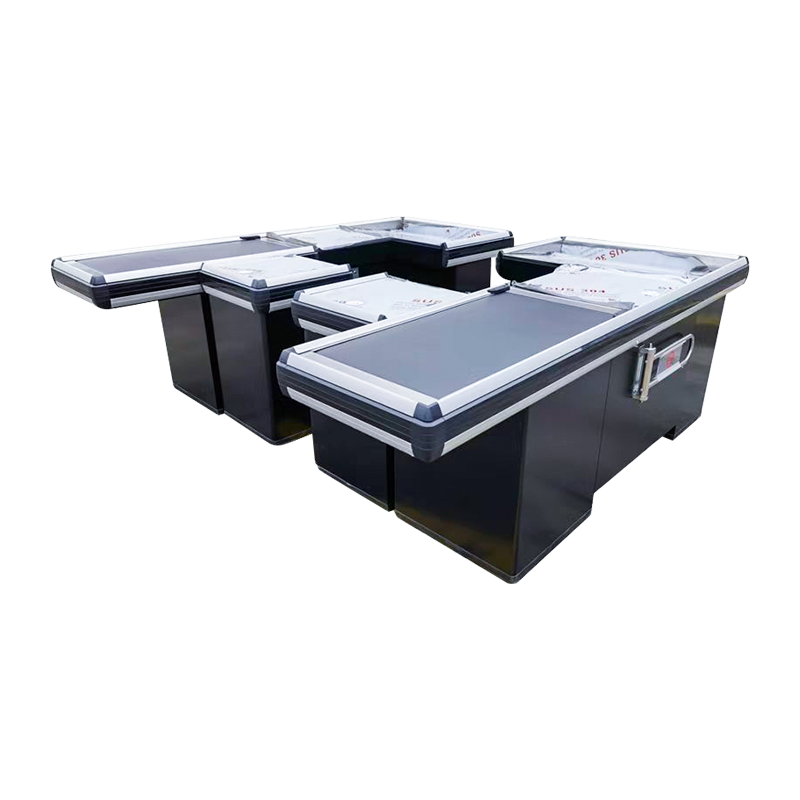
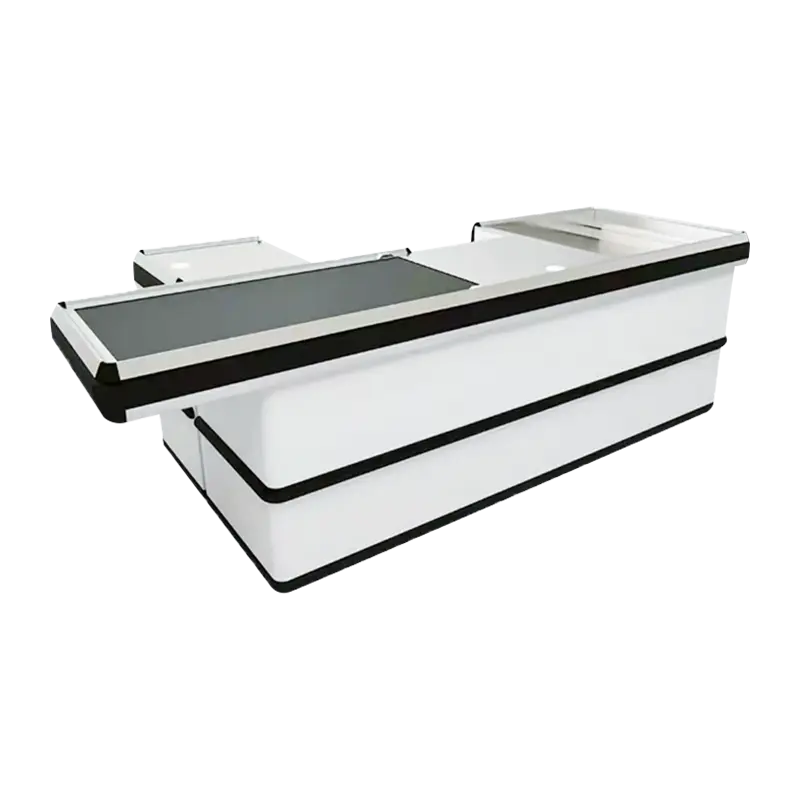
The physical footprint and shape of the checkout counter must be determined by the store's floor plan, traffic volume, and transaction complexity — not by default convention. Single straight counters work well in compact boutiques with low traffic. L-shaped configurations create natural workflow separation between payment processing and bagging, improving speed in medium-traffic environments. U-shaped or wrap-around designs are suited to service-intensive formats where returns, gift wrapping, and customer inquiries are handled at the same station. In supermarkets and high-volume grocery environments, linear multi-lane configurations with dedicated bagging zones and queue management systems are the operational standard. Before any fixture is specified, measure the available floor area precisely and map the intended customer flow path from queue entry through transaction completion to exit.
Ergonomics and Staff Comfort
Counter height and reach distance are ergonomic factors that directly affect staff performance and long-term health outcomes. The ideal working surface height for a standing operator is typically between 90cm and 95cm, with sufficient under-counter space to accommodate stool seating during lower-traffic periods. Monitor and display angles should be adjustable to minimize neck strain across operators of different heights. A silent operating environment — achieved through quality hardware, dampened surfaces, and well-engineered mechanical components — reduces cognitive load and fatigue during extended shifts, which in turn reduces transaction errors. These ergonomic considerations are not luxuries; they are operational investments that pay back through reduced staff turnover and consistent service quality.
Technology Integration
Modern retail checkout counter design must accommodate a full technology stack from the outset. This includes the POS terminal, barcode scanner (capable of reading both 1D barcodes and 2D QR codes without lag), customer-facing display, receipt printer, payment terminal, and cash drawer — all integrated cleanly into the counter structure without exposed cabling or cluttered surfaces. High-speed scanning hardware reduces per-transaction time significantly, and a powerful processor ensures smooth operation even during simultaneous transaction processing at peak hours. Payment flexibility is equally critical: counters must support cash, credit and debit cards, contactless NFC payments, and mobile payment platforms to meet the diverse preferences of today's shoppers. Pre-planning cable management channels, power outlet placement, and hardware mounting points during the design phase eliminates retrofitting costs later.
Custom Cash Wrap Counter vs. Standard Solutions
One of the most consequential decisions in checkout area planning is whether to specify a standard off-the-shelf counter or invest in a custom cash wrap counter built to the store's exact requirements. Both paths have legitimate applications, and the right choice depends on budget, timeline, space constraints, and long-term brand strategy.
| Factor | Standard Counter | Custom Cash Wrap Counter |
|---|---|---|
| Lead Time | Short — available from stock | 4–8 weeks depending on complexity |
| Upfront Cost | Lower | Higher — reflects bespoke engineering |
| Dimensional Fit | Fixed sizes — may not suit space | Built to exact floor plan dimensions |
| Brand Alignment | Generic — limited finish options | Full material, color, and finish control |
| Technology Integration | Retrofit required | Designed around your exact tech stack |
| Multi-Store Consistency | Dependent on supplier stock availability | Identical replication across all locations |
| Long-Term Value | Lower — compromise on fit and durability | Higher — built for the application |
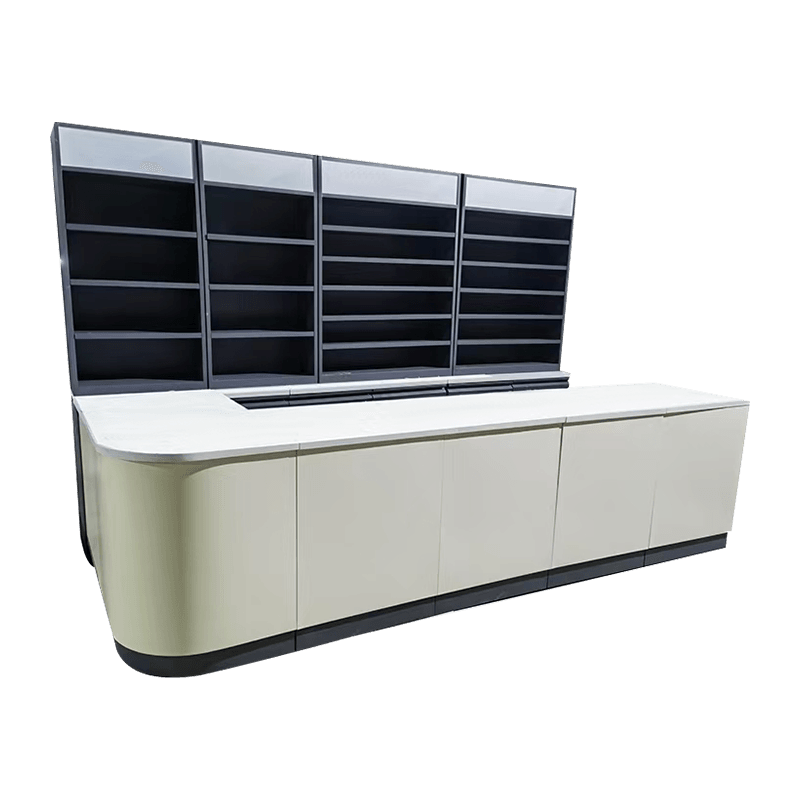
For retailers operating a single location on a constrained budget, a quality standard counter can serve well in the short term. For brands with multiple locations, a defined aesthetic identity, or non-standard floor plan dimensions, the custom cash wrap counter delivers measurably better long-term value. Material durability is a critical specification: counters built from high-quality substrates — solid surface tops, high-pressure laminate faces, reinforced structural frames — withstand the intense daily use of a busy retail environment and resist the wear caused by frequent movement, minor collisions, and constant surface contact. Choosing durable materials upfront reduces maintenance costs and replacement cycles over the fixture's lifetime.
Retail Checkout Fixtures That Drive Impulse Sales
The checkout counter itself is only part of the equation. The retail checkout fixtures surrounding and integrated into the checkout area are what convert the zone from a transaction point into a sales engine. Strategic fixture selection and placement in the checkout area should be guided by product size, margin profile, and the browsing behavior of customers who are already in a buying mindset.
- Countertop display units — Compact acrylic, metal, or wood fixtures placed directly on the counter surface for small, high-margin items such as gift cards, lip balm, phone accessories, and single-serving snacks. Eye-level visibility and easy reach are the two design priorities
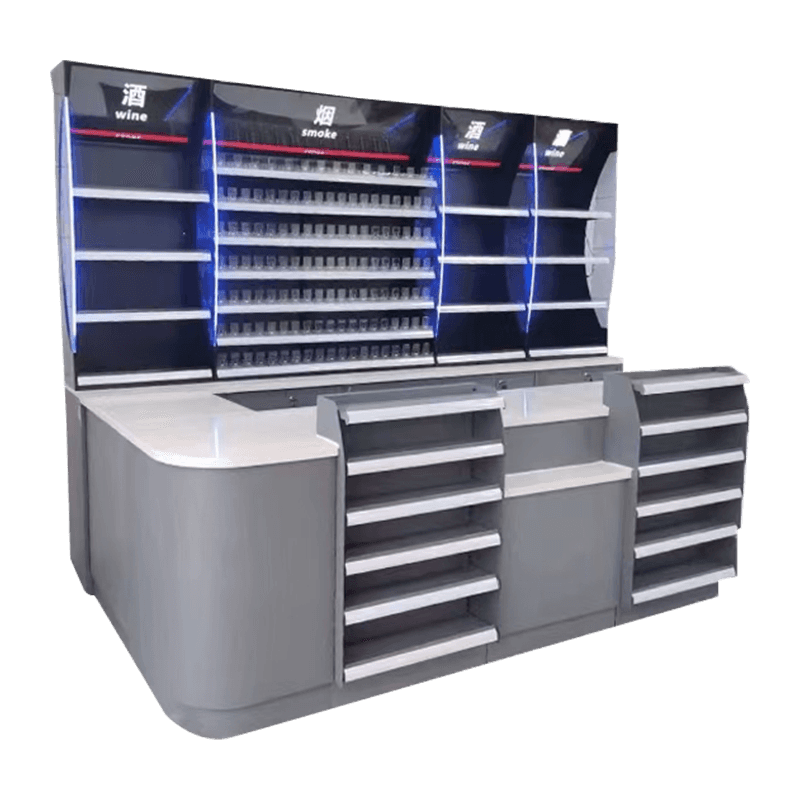
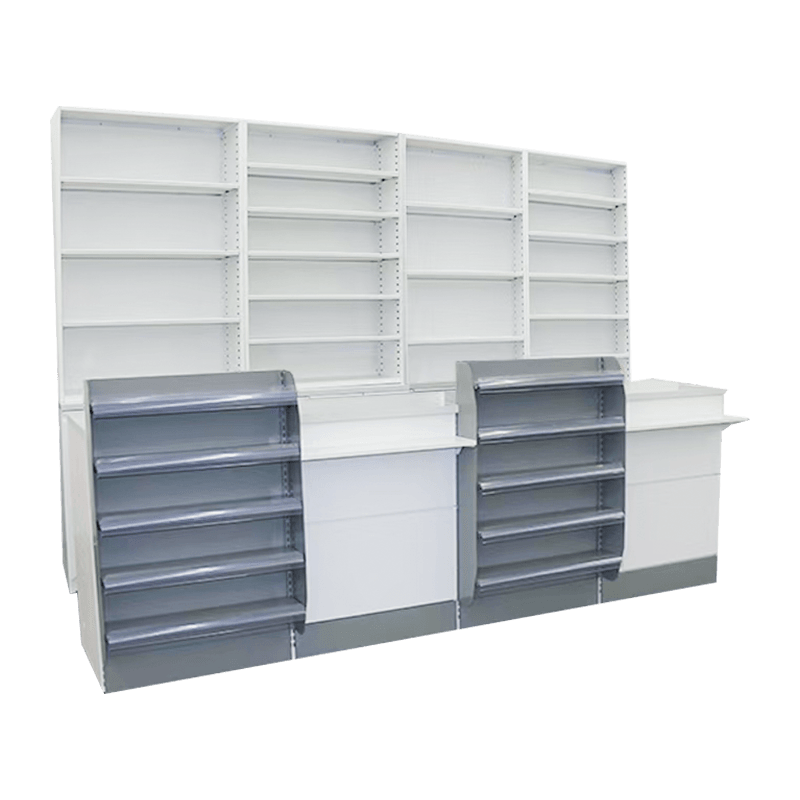
- Built-in shelving panels — Integrated into the counter's front face or side panels, these fixtures display additional impulse products without consuming counter surface space, keeping the transaction workspace clean and operational
- Queue lane fixtures — Freestanding or wall-mounted displays positioned along the customer queue path before they reach the counter. These capture attention during wait time and are highly effective for seasonal promotions, travel-sized products, and low-cost add-ons
- Tiered merchandising racks — Multi-level fixtures that maximize vertical space in compact checkout areas, allowing a higher product count without expanding the physical footprint
- Branded signage holders — Integrated frames for promotional messaging, loyalty program communication, or seasonal campaigns that reinforce brand identity at the final customer touchpoint
Product selection for checkout fixtures should prioritize items that are small, affordable, and require minimal consideration — purchases customers can make in seconds without interrupting the transaction flow. Rotating the product assortment seasonally keeps the display fresh for repeat customers and creates new reasons to make an add-on purchase each visit.
Mobility and Flexibility in Modern Checkout Design
Fixed checkout configurations suit high-volume stores with predictable traffic patterns, but many modern retail formats require greater flexibility. Mobile or modular checkout stations — built on lockable castors with integrated cable management — allow the checkout area to be repositioned quickly between standard operation, promotional events, and seasonal peak configurations. This flexibility eliminates the time and cost of manual relocation and re-wiring associated with traditional fixed installations, making it practical to adapt the checkout zone to fluctuating customer traffic demands without significant operational disruption.
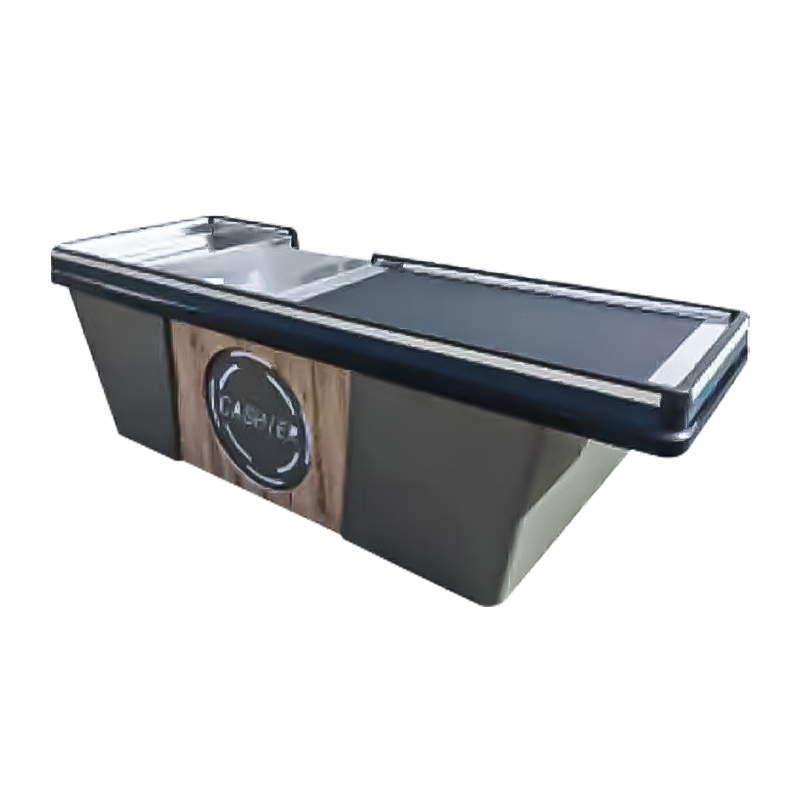
In supermarket environments, mobile cashier stations offer particular value for temporary promotional setups or additional lanes during peak trading periods. A well-engineered mobile unit maintains the structural stability and material quality of a fixed counter — resisting malfunction from frequent repositioning — while providing the operational agility that modern retail formats increasingly require. When specifying a mobile checkout counter, prioritize units with a low center of gravity, reinforced frame construction, and smooth-rolling heavy-duty castors rated for the counter's loaded weight.
Branding and Aesthetics at the Checkout
The checkout counter is one of the most visible fixtures in the store, and its material finish, color palette, and overall aesthetic make a direct statement about brand positioning. Premium brands typically specify solid surface or stone-effect tops, matte laminate faces, and integrated LED lighting to project quality and refinement. Value-focused retailers use high-pressure laminate in bold brand colors with clean graphic panels to communicate energy and accessibility. Natural and organic brands favor warm wood veneers or kraft-textured surfaces that reinforce an eco-conscious identity.
Beyond materials, the checkout area offers several specific branding opportunities: framed mission statement panels, community involvement displays, product origin stories, and loyalty program sign-up prompts can all be integrated into the fixture design without cluttering the functional workspace. Customers waiting in a short queue have a few moments of focused attention — a well-designed custom cash wrap counter uses that time to deepen brand connection, not just process a payment. When checkout counter design for retail is treated as a strategic investment rather than a commodity purchase, the return — in transaction speed, impulse revenue, staff efficiency, and brand equity — is both measurable and lasting.